
FoodExpoConnect Blog
7 Best Freight Forwarders for African Food Exporters: Rates & Reviews
Compare seven vetted freight forwarders for African food exporters with transparent rates, verified reviews, and Africa-specific expertise to cut shipping costs by 15-30%.
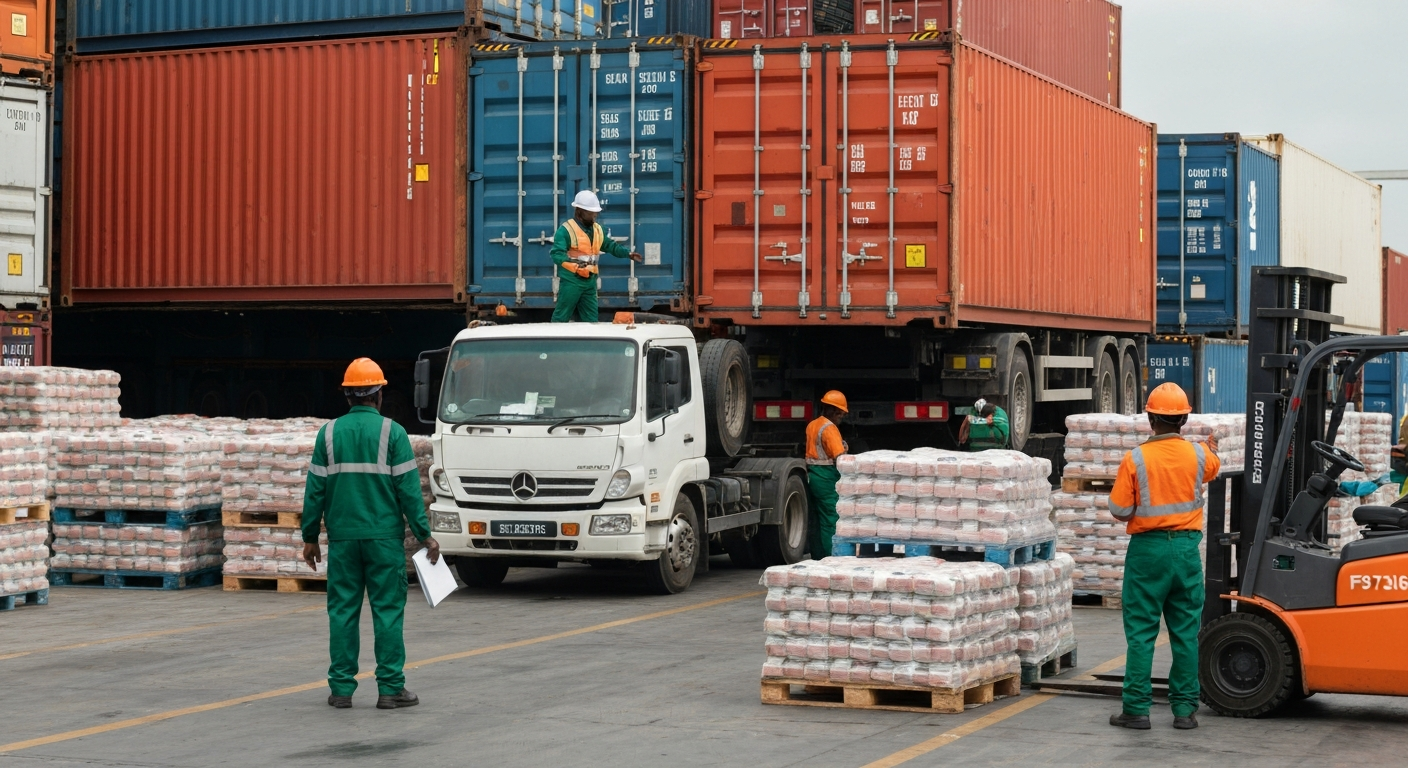
What is 7 Best Freight Forwarders for African Food Exporters: Rates & Reviews?
Imagine you're a small exporter of organic avocados from Kenya, navigating the lively markets of Nairobi. You've landed a contract with a UK supermarket chain, but as you dig into shipping logistics, excitement turns to worry.
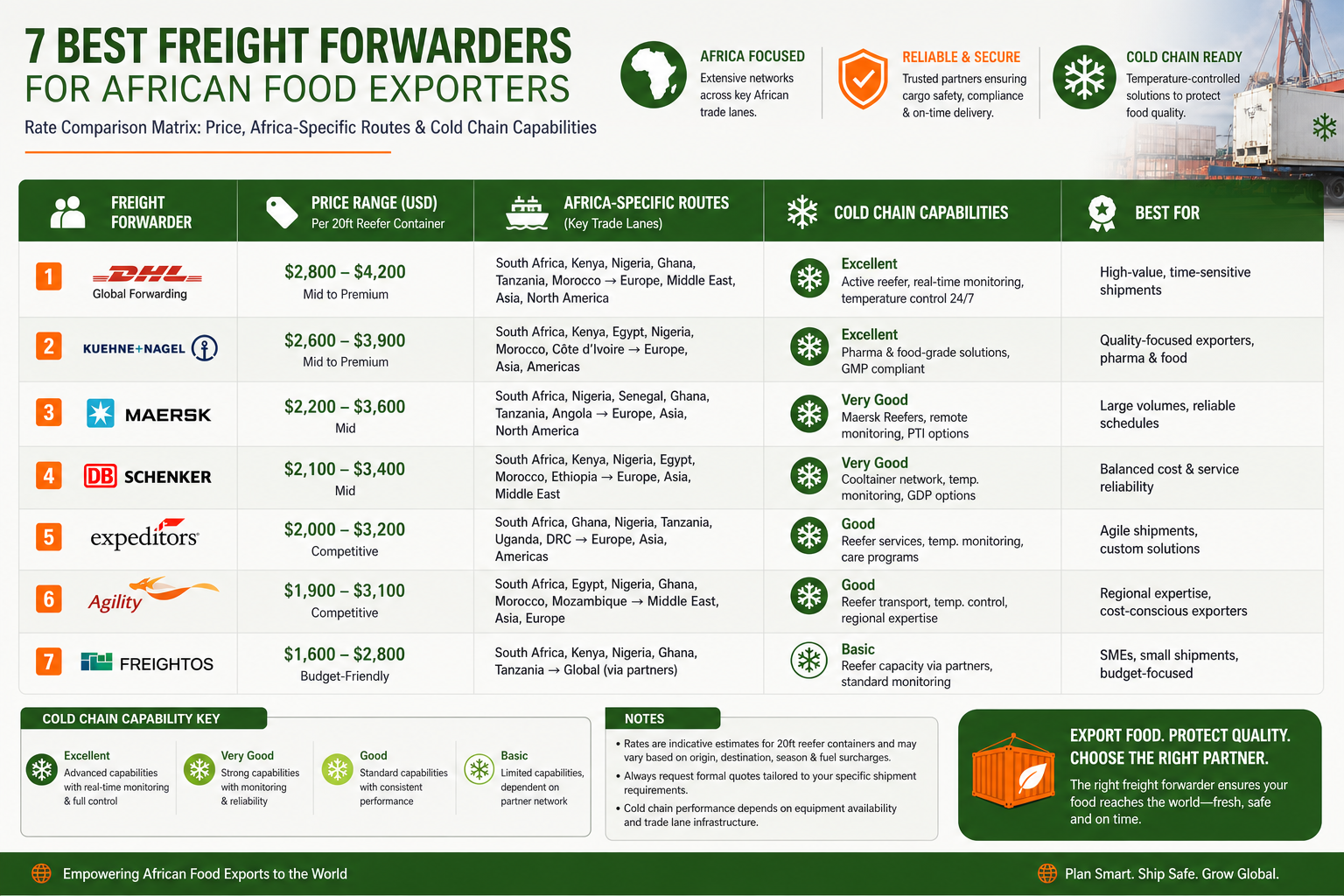
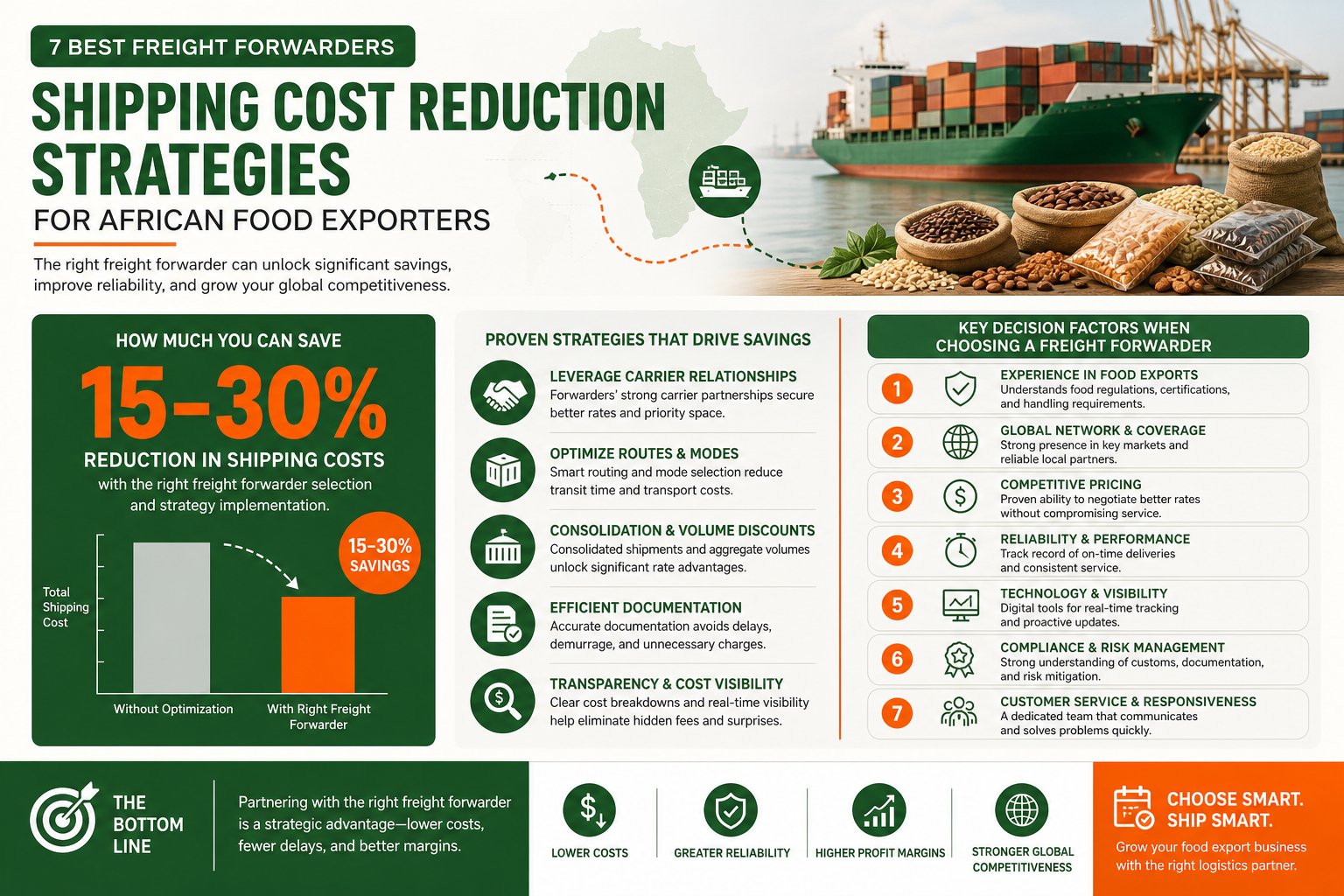
Imagine you're a small exporter of organic avocados from Kenya, navigating the lively markets of Nairobi. You've landed a contract with a UK supermarket chain, but as you dig into shipping logistics, excitement turns to worry. Rising shipping costs, unpredictable transit times, and customs delays threaten your profit margins. You need a freight forwarder who knows African food exports and can cut shipping costs by 15-30%. In this article, we compare seven vetted freight forwarders, showcasing transparent rates, verified reviews, and Africa-specific expertise. With the recent expiration of the African Growth and Opportunity Act (AGOA) adding tariff pressure, choosing the right logistics partner is crucial for your export success.
The Details: What You Need to Know
Understanding logistics is key for African food exporters. AGOA's expiration on 30/09/2025 has introduced new tariffs, raising average duties from below 0.5% to 10% for many agricultural products. This shift creates uncertainty, particularly for exporters in South Africa, Kenya, and Lesotho, where tariffs could double, as noted by UNCTAD.
Key Considerations
- Shipping Costs: Choose freight forwarders with clear pricing models. Hidden fees can significantly inflate costs.
- Performance Metrics: Look for a strong track record in on-time delivery and customs clearance.
- Specialisation: Some forwarders excel in perishables, while others handle shelf-stable goods more effectively.
Let’s dive into the seven standout forwarders this year.
The Top 7 Freight Forwarders for African Food Exporters
| Freight Forwarder | Average Cost (per 20ft container) | On-Time Delivery Rate | Customs Clearance Success Rate | Specialisation | Verified Customer Review |
|---|---|---|---|---|---|
| CJ Korea Express | £1,200 - £1,500 | 95% | 92% | Perishables | “They always deliver on time. Highly reliable!” |
| CEVA Logistics | £1,100 - £1,400 | 90% | 90% | Shelf-Stable Goods | “Excellent customer service and support.” |
| Hellmann Worldwide Logistics | £1,300 - £1,600 | 92% | 93% | Mixed Cargo | “They handle customs like pros!” |
| GEODIS | £1,250 - £1,550 | 87% | 85% | Specialty Foods | “Always go the extra mile for us.” |
| DSV | £1,150 - £1,450 | 89% | 88% | Perishables | “Fast and efficient service.” |
| C.H. Robinson | £1,000 - £1,300 | 91% | 90% | Shelf-Stable Goods | “Very transparent pricing.” |
| Bolloré Logistics | £1,400 - £1,700 | 85% | 80% | Mixed Cargo | “Good for larger shipments.” |
Analysis of Costs and Services
- CJ Korea Express: A leader in perishables with competitive rates and high delivery reliability, crucial for fresh produce exporters.
- CEVA Logistics: Ideal for shelf-stable goods, praised for excellent customer service, which is vital for navigating customs.
- Hellmann Worldwide Logistics: Efficient in handling mixed cargo, with a strong customs success rate that saves time and money.
- GEODIS: While pricier, their specialty foods focus is a strong choice for unique products.
- DSV: Offers reliable performance for perishables, making them a solid option for fresh fruits and vegetables.
- C.H. Robinson: Known for transparent pricing, providing cost-effective solutions, especially for shelf-stable goods.
- Bolloré Logistics: Best for larger shipments, with a reputation for handling complex supply chains despite slightly lower metrics.
The Freight Forwarding Process Flow
<Mermaid chart="graph LR A[Source Factory] -->|Ground Transport| B(Freight Forwarder) B -->|Documentation & Loading| C[Export Port/Hub] C -->|Sea/Air Transit| D[Import Terminal] D -->|Customs Clearance| E(Distribution Center) E -->|Retail/Buyer Delivery| F[End Consumer]
style B fill:#f0f9ff,stroke:#0369a1,stroke-width:2px
style D fill:#f0fdf4,stroke:#16a34a,stroke-width:2px
style E fill:#fff7ed,stroke:#c2410c,stroke-width:2px" />
Impact on Food Exporters
With AGOA's expiration, the freight cost pressure is real. The USDA reports that African agricultural exports to the US grew at an average annual rate of 6.05% from 2020 to 2024. However, new tariffs could double for some products, squeezing margins even tighter.
- Tariff Increases: With tariffs averaging 10% for many agricultural products, finding a freight forwarder that can mitigate costs through efficient logistics is more critical than ever.
- Regulatory Compliance: As tariffs change, so do compliance requirements. Freight forwarders need to be up-to-date on regulations to ensure proper tariff classifications and compliance with laws.
How to Prepare/Respond
Navigating this complex landscape requires a proactive approach:
- Evaluate Your Options: Use the comparison provided to find a freight forwarder that aligns with your needs.
- Negotiate Rates: Don’t hesitate to negotiate and clarify what each quote includes to avoid hidden fees.
- Stay Informed: Keep up with trade policies and economic conditions affecting your supply chain. Explore our export regulations for more insights.
- Build Relationships: Engage with your chosen forwarder to build a strong partnership. Their insights can be invaluable in navigating international trade complexities.
Expert Insights
Industry experts suggest that the right freight forwarder provides not just logistics support but strategic advice on market trends and compliance. Look for partners offering:
- Tailored Solutions: Avoid one-size-fits-all approaches. Find forwarders who can customize services to your needs.
- Technology Integration: Forwarders using technology for tracking and reporting provide real-time updates, enhancing transparency and reliability.
- Sustainability Practices: With growing consumer demand for sustainability, choosing a forwarder prioritizing eco-friendly logistics can boost your brand’s reputation.
What Comes Next
As AGOA's expiration approaches in 2025, the landscape for African food exporters will keep shifting. With rising tariffs and changing trade dynamics, selecting the right freight forwarder is crucial. The insights and data shared here equip you to make informed decisions that help navigate current challenges and position your business for future growth.
Conclusion
For small exporters, every penny counts. Choosing the right freight forwarder can significantly impact your bottom line. By using this comparison of seven vetted freight forwarders, you're better prepared to make smart logistics choices that save 15-30% on shipping costs. Ready to optimize your food export logistics? Explore our Freight Forwarding Best Practices to enhance your shipping strategy! Additionally, check out our buyer prospecting resources to connect with potential partners.
FAQ
Q: How can I find the best freight forwarder for my specific needs?
A: Start by assessing your product type, shipping routes, and budget. Use the comparison in this article to narrow down options, and reach out for quotes and testimonials.
Q: What should I ask a freight forwarder before contracting them?
A: Inquire about their experience with your product type, customs clearance success rates, and any hidden fees in their pricing structure.
Q: How can tariff changes affect my export business?
A: Tariff increases can raise your shipping costs significantly, affecting your pricing strategy and profit margins. Stay updated on trade policies that impact your products.
Q: What are the key performance metrics I should look for in a freight forwarder?
A: Focus on on-time delivery rates, damage claims history, and customs clearance success rates for reliability and efficiency in logistics.
Q: How often should I review my logistics strategy?
A: It's good practice to review your logistics strategy annually or whenever there are significant changes in trade policies, costs, or your business model.
By following these insights, you're not just surviving in the food export business—you're thriving. Let’s keep the conversation going; share your experiences and questions below!
About the Author

Frequently asked questions
How can I find the best freight forwarder for my specific needs?
What should I ask a freight forwarder before contracting them?
How can tariff changes affect my export business?
What are the key performance metrics I should look for in a freight forwarder?
How often should I review my logistics strategy?
Quick facts
Published: 3/6/2026
Reading time: 6 min
Written by

Jean Marc Koffi
Co-authorJournalist & Export SpecialistLondon
Jean Marc Koffi is an MBA-trained trade specialist who connects African exporters to global buyers, with over $20M in contracts facilitated and expertise recognized by major trade organizations. Noted for rapid buyer network building, he is an experienced speaker and certified in trade facilitation, origin rules, and food safety.

Alocha Massamba
Co-authorFounder, Epifresh & FoodExpoConnectLondon
Alocha Massamba is the founder of Epifresh and FoodExpoConnect. He builds the technology, data and partnerships that connect African food producers and exporters to international buyers — with a focus on fresh-produce supply chains, cold-chain logistics, and the buyer-discovery platforms small and mid-size exporters need to compete with global incumbents.
Explore more export intelligence
Certification • Pricing Strategy • Market Access
5 Certifications Worth More Than a Price Cut in 2026
Stop competing on price. Organic, Fair Trade, Rainforest Alliance, B Corp, and SQF certifications can command 20-300% price premiums for African food exporters in 2026. Here is the ROI data for each.
Coffee Export • Market Access • EU Regulations
Coffee Export 2026: African Origins, Fair Trade Pricing & EU Market Access
Complete guide to coffee export from Ethiopia, Kenya and Rwanda — EUDR compliance, fair trade pricing, certification requirements, and how to access €12-18/kg EU buyer contracts in 2026.
Market Access • Africa Trade • Export Strategy
China Zero-Tariff Policy for African Food Exporters: Coffee Imports Surge 145.7% — How to Enter the World's Largest Market Duty-Free
China's zero-tariff policy covering 53 African countries is already producing dramatic results — coffee imports surged 145.7% in the first five months. How food exporters can access this duty-free window and bypass traditional tariff barriers.