Breaking Into European Specialty Food Markets: A Small Exporters Success Story
How small food exporters can enter European specialty markets: find high-demand, low-competition niches, reach importers remotely, and meet EU packaging and labelling rules.
· · 4 min read
In short
How can a small food exporter break into European specialty food markets?
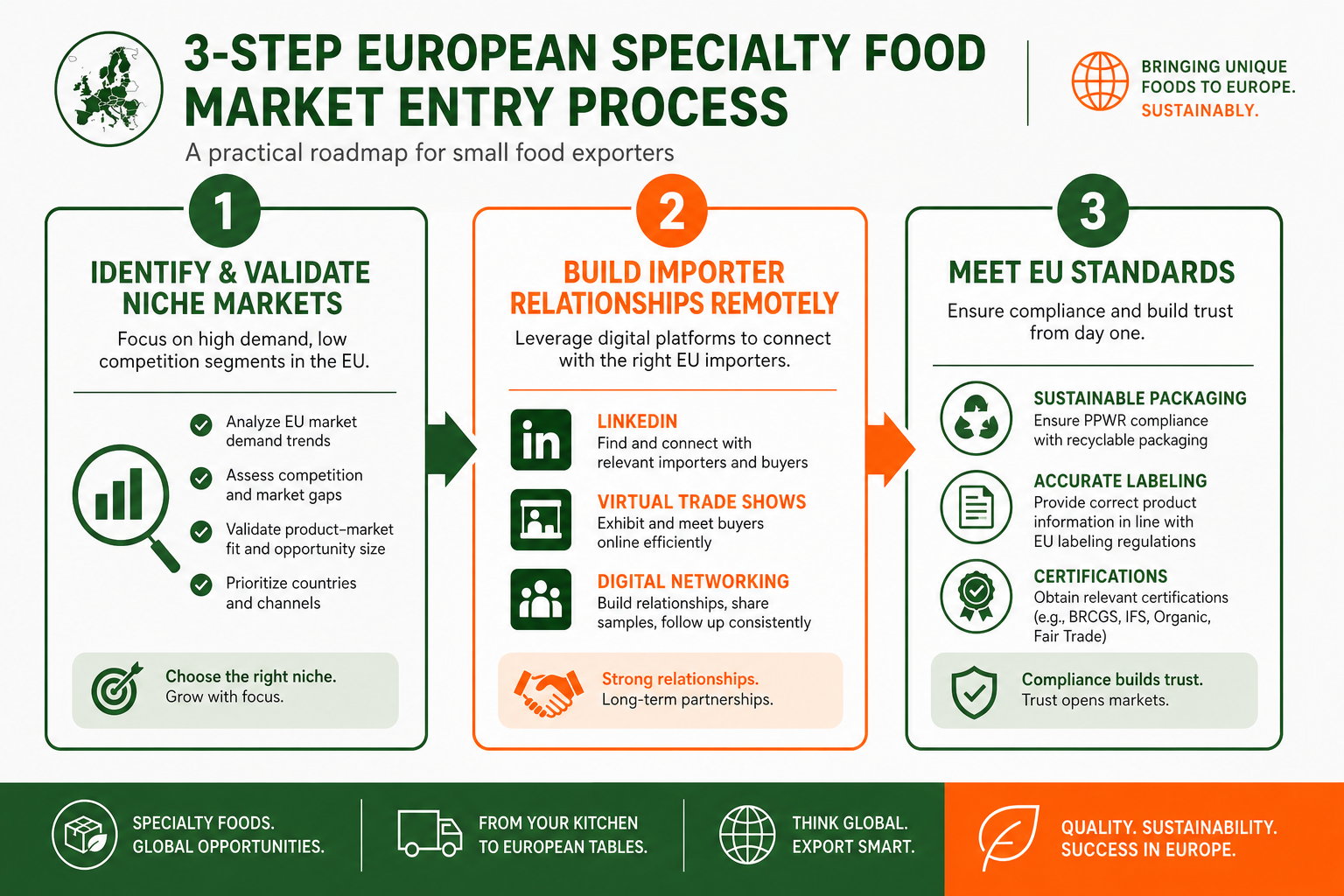
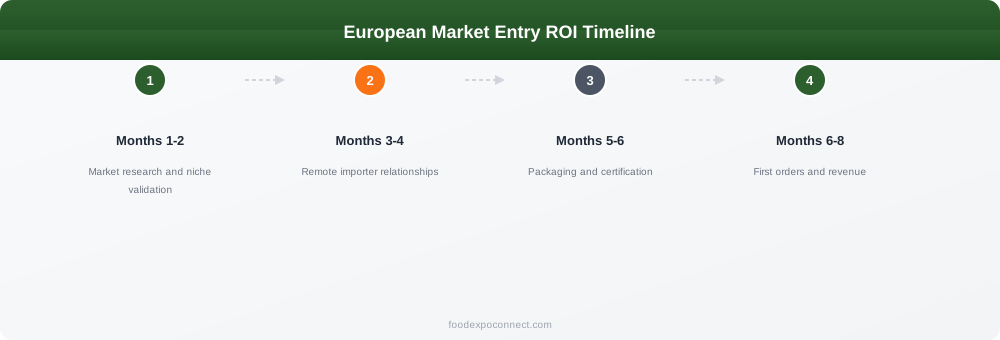
A small exporter can break into European specialty food markets by first identifying niches with high demand and low competition, such as health-focused, organic, plant-based or low-additive products. Next, build relationships with importers remotely through LinkedIn and virtual trade shows, using force majeure clauses in contracts. Finally, meet EU packaging, labelling and certification standards, including recyclable packaging under the PPWR.
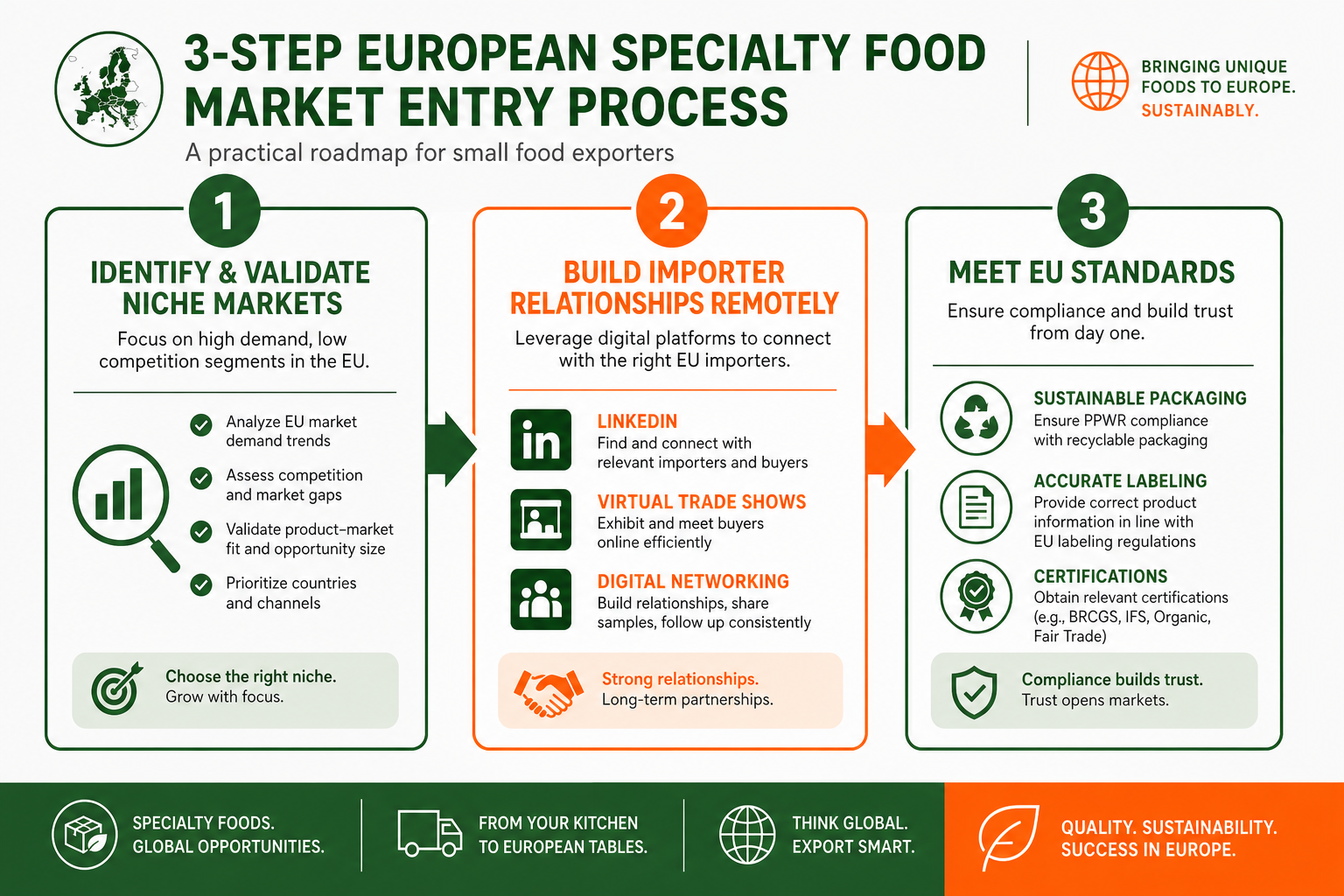
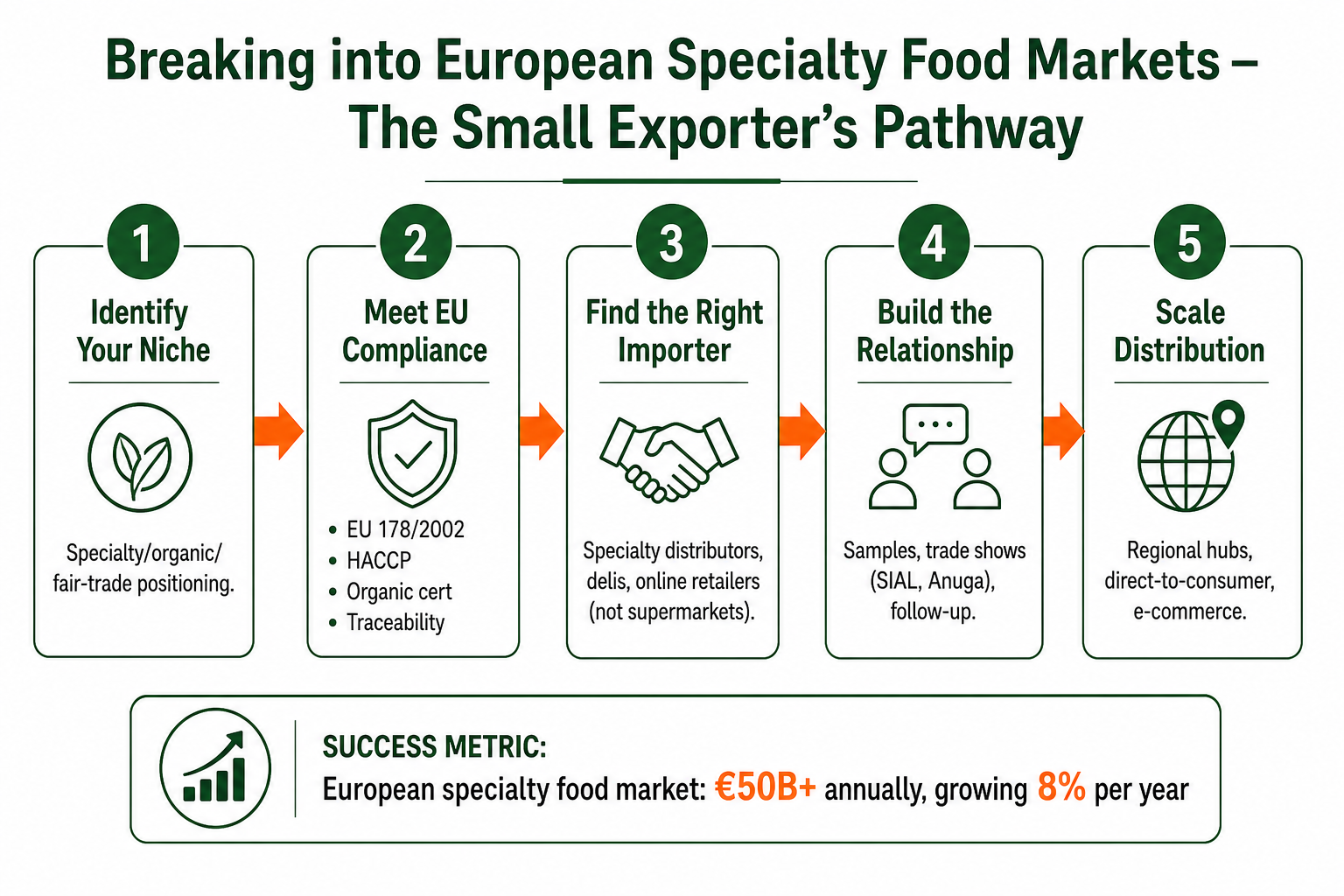
Imagine your small food business securing spots in 15 European specialty stores within just six months. It might seem like a dream, especially with current geopolitical challenges affecting global trade. Yet, one small exporter made it happen with a targeted three-step market entry strategy. This success story serves as a guide for small exporters navigating Europe's complex specialty markets, where both the stakes and rewards are high.
With tensions in the Middle East, particularly around the Red Sea and Strait of Hormuz, disrupting global commerce, freight costs are rising and delays are common in perishable food exports. Picture your goods stuck in a shipping bottleneck, missing their destination. But with strategic planning and a focus on niche markets, you can tackle these challenges head-on. Let's explore how to identify and validate niche European specialty food segments, build relationships with European importers from your office, and adjust to meet EU market standards—all while navigating geopolitical hurdles.
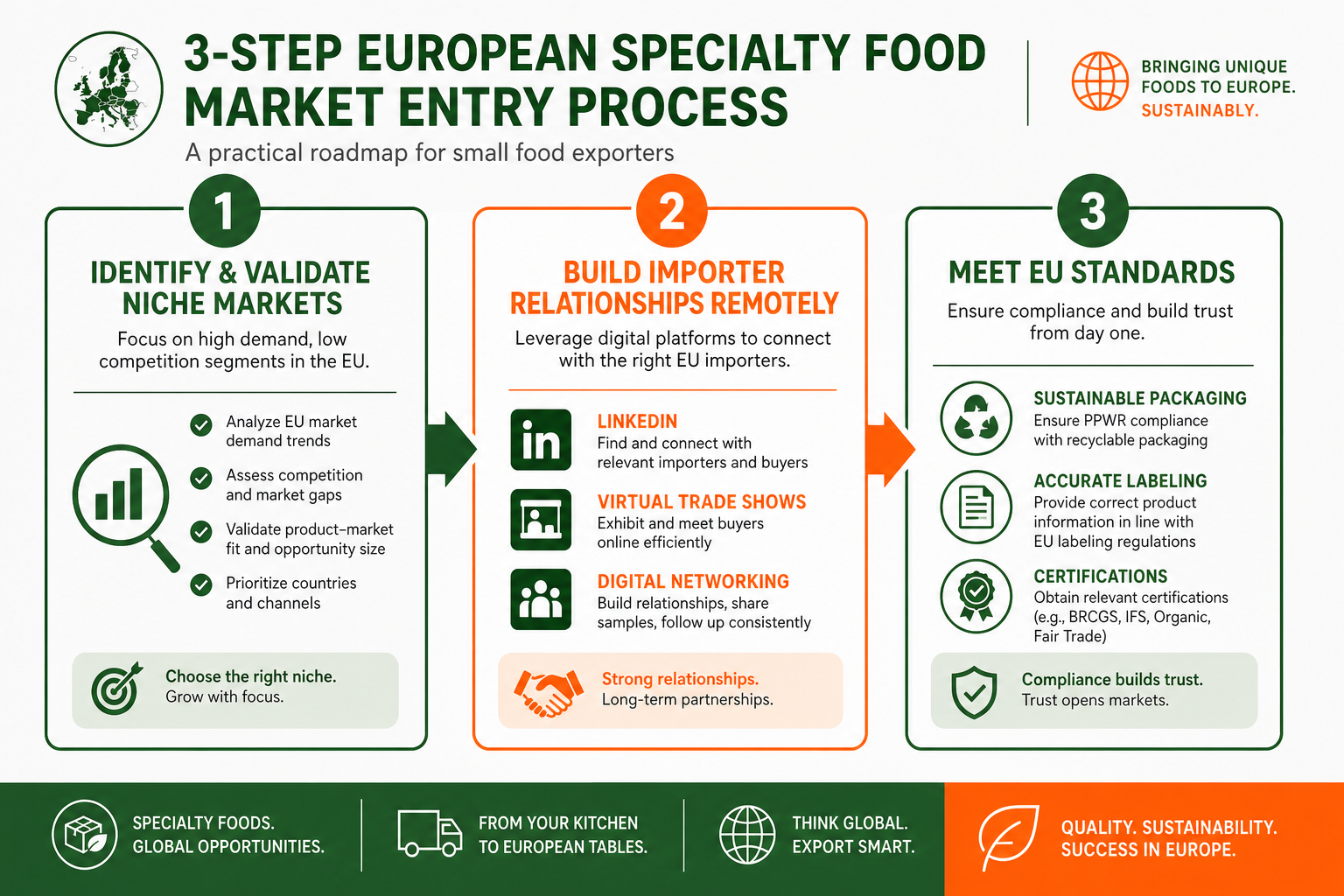
Identifying and Validating Niche Markets
High Demand, Low Competition
To break into the European specialty food market, start by pinpointing segments with high demand and low competition. BestFoodImporters highlights that in 2026, markets favor health-focused, sustainable foods. The EU's 2025 regulations cutting down artificial colors and preservatives fuel this demand, opening doors for exporters with low-additive products.
Conduct thorough market research using tools like Google Trends and industry reports to spot emerging trends and consumer preferences. For example, plant-based and organic foods are gaining traction, driven by movements like "farm-to-table" and a growing focus on ethical sourcing. Small food exporters should emphasize the provenance and sustainability of their products to stand out.
Building Relationships with European Importers
Without Traveling Overseas
After finding a promising market, how do you connect with European importers and distributors without traveling? Follow this approach:
-
Digital Platforms: Use LinkedIn to connect with potential partners. Craft personalized messages showcasing your product's unique selling points and how they align with their business needs.
-
Virtual Trade Shows: Participate in these events to network with industry players. They offer a chance to showcase your products and meet importers looking for new suppliers.
-
Dynamic Contract Negotiation: Include force majeure clauses in your contracts to protect against disruptions, like those caused by ships rerouting due to the Red Sea crisis.
These strategies help you build a network of importers and distributors, ensuring your products reach European shelves despite logistical challenges.
Packaging, Labeling, and Certification Adjustments
Meeting EU Market Standards
To succeed in the European specialty food market, your products must comply with strict EU standards for packaging, labeling, and certification. The EU's Packaging and Packaging Waste Regulation (PPWR) requires conformity assessments for non-EU packaged imports by the end of 2025, favoring recyclable materials.
-
Sustainable Packaging: Use recyclable and eco-friendly packaging to align with EU sustainability mandates. This meets regulatory requirements and appeals to eco-conscious consumers.
-
Accurate Labeling: Ensure labels comply with EU regulations, including language requirements and nutritional information. Mislabeling can lead to costly recalls, particularly with new rules like Regulation (EU) 2025/2084 setting stricter Listeria standards.
-
Certification Compliance: Secure necessary EU certifications, such as animal welfare or organic certifications, to assure importers of your product's compliance with regional standards.
Common Questions (FAQ)
Q: How can I identify niche markets with high demand in Europe?
A: Use market research tools and reports to spot trends. Focus on segments like organic and plant-based foods, which are in high demand due to health and sustainability concerns.
Q: What are effective ways to network with European importers remotely?
A: Use digital platforms like LinkedIn and join virtual trade shows. Personalize your communication and highlight your product's unique features.
Q: What packaging adjustments are necessary for the EU market?
A: Use recyclable materials and ensure packaging meets the EU's PPWR standards. Accurate labeling and obtaining necessary certifications are also crucial.
Conclusion
Despite geopolitical hurdles impacting global trade, especially in the Middle East, small food exporters can thrive in European specialty markets by adopting strategic market entry approaches. By identifying niche markets, building strong importer relationships, and meeting EU standards, you can transform your business and secure a spot in this lucrative market. Start your journey today by reassessing your strategy with these insights for success. For more detailed guidance on navigating European food export regulations, explore our resources on European Food Export Regulations and Sustainable Packaging for Food Exports.
About the Author
Jean-Marc Koffi, Export Specialist & AfCFTA Trade Facilitator. Jean-Marc has over 14 years of experience exporting more than $9.5 million in mangoes, cocoa, coffee, and cashews from West Africa to EU, Middle East, and North American markets. He helps African SMEs build reliable, buyer-ready export pipelines under AfCFTA.
Questions and answers
- How can I identify niche food markets with high demand in Europe?
- Use market research tools such as Google Trends and industry reports to spot emerging trends. Health-focused and sustainable foods are favoured, and EU rules cutting artificial colours and preservatives are boosting demand for low-additive products. Organic and plant-based foods are gaining traction, so emphasise provenance and sustainability.
- How can I connect with European importers without travelling?
- Use LinkedIn to connect with potential partners, sending personalised messages that show how your product's unique selling points fit their business. Take part in virtual trade shows to meet importers looking for new suppliers, and include force majeure clauses in contracts to protect against shipping disruptions such as Red Sea rerouting.
- What packaging and labelling changes are needed for the EU market?
- Use recyclable, eco-friendly packaging, as the EU Packaging and Packaging Waste Regulation favours recyclable materials and requires conformity assessments for non-EU packaged imports. Make sure labels meet EU language and nutritional information rules, and secure relevant certifications, such as organic or animal welfare, to reassure importers.
Written by

Jean Marc Koffi
Co-authorJournalist & Export SpecialistLondon
Jean Marc Koffi is an MBA-trained trade specialist who connects African exporters to global buyers, with over $20M in contracts facilitated and expertise recognized by major trade organizations. Noted for rapid buyer network building, he is an experienced speaker and certified in trade facilitation, origin rules, and food safety.

Alocha Massamba
Co-authorFounder, Epifresh & FoodExpoConnectLondon
Alocha Massamba is the founder of Epifresh and FoodExpoConnect. He builds the technology, data and partnerships that connect African food producers and exporters to international buyers — with a focus on fresh-produce supply chains, cold-chain logistics, and the buyer-discovery platforms small and mid-size exporters need to compete with global incumbents.
Latest briefings
Trade Policy
July 24: Section 122 Dies, Section 338 Rises — Navigating the New US Tariff Landscape for Food ExportersSection 122 import surcharge expires July 24 (effective US tariff rate drops from ~13% to ~7%), but Section 338 invokes 50% tariffs on Canadian dairy and alcohol. What food exporters must know about the new US tariff landscape.
Market Access
China's Imported Food Market 2026: GB Standards Update, CBEC Channels & Market Entry StrategyComplete guide to China food import regulations in 2026 — new GB 2763 pesticide MRLs, GB 7718 labeling update, CBEC e-commerce channels (Tmall Global, JD Worldwide), and how exporters can access $220B+ of import demand.
Certification
5 Certifications Worth More Than a Price Cut in 2026Stop competing on price. Organic, Fair Trade, Rainforest Alliance, B Corp, and SQF certifications can command 20-300% price premiums for African food exporters in 2026. Here is the ROI data for each.