How Small Coffee Exporters Beat Starbucks at Their Own Game
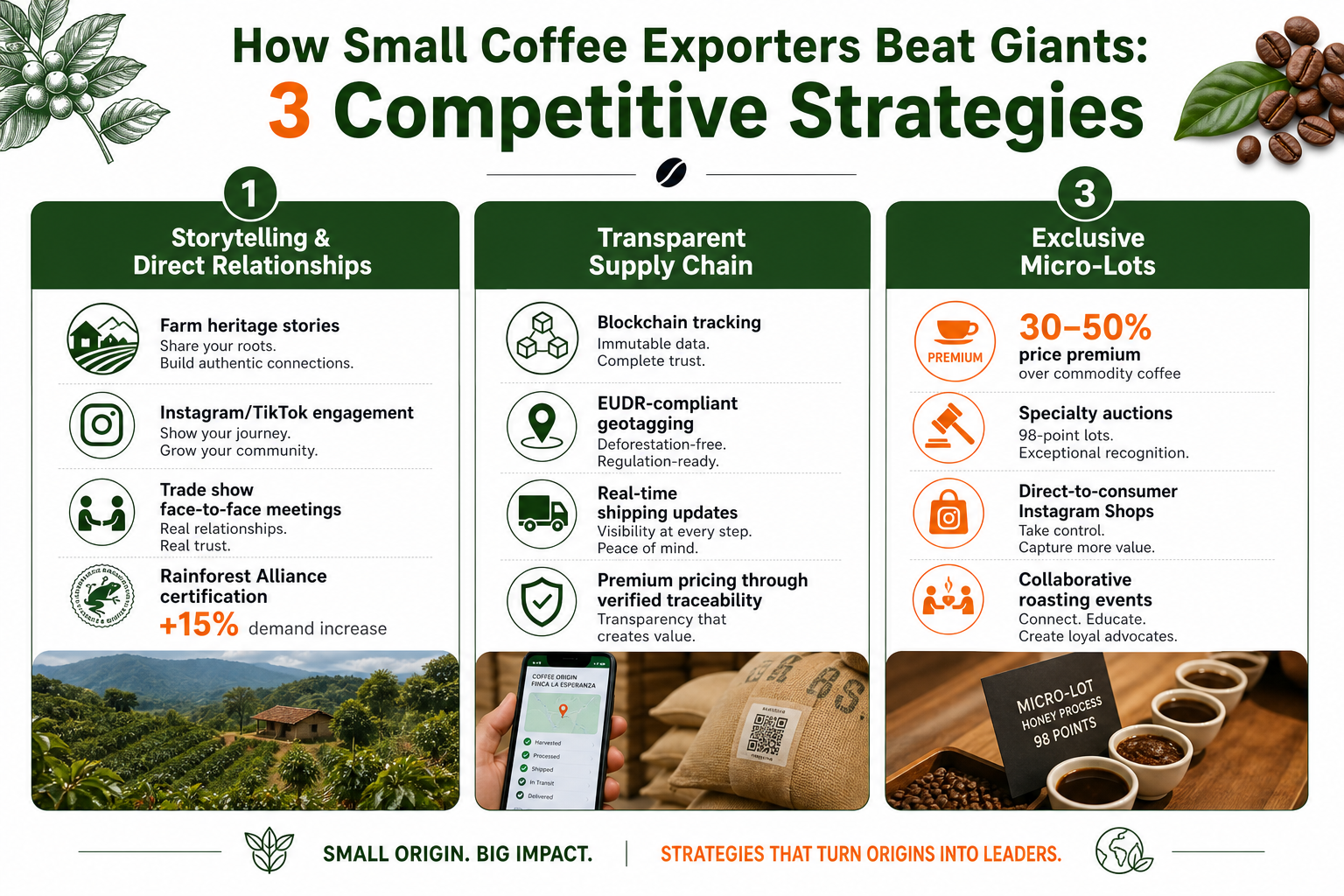
Three strategies small coffee exporters use to compete with large brands: storytelling-led direct relationships, transparent supply chain tracking and exclusive micro-lots.
· 4 min read
In short
How can small coffee exporters compete with large brands like Starbucks?
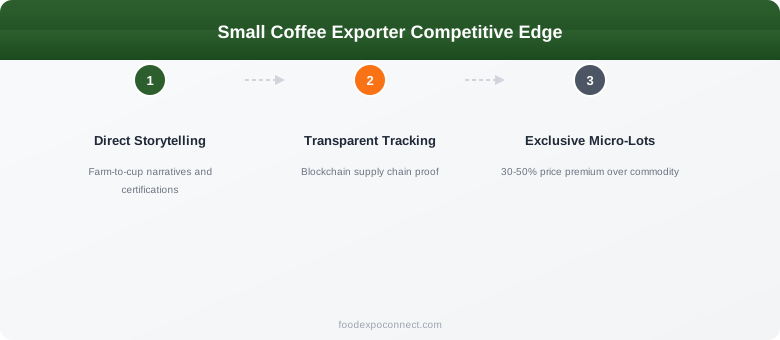
Small coffee exporters compete by building niche markets rather than matching scale. They tell the story behind their farms to build direct relationships with specialty roasters, use digital tracking such as blockchain and EUDR-compliant geotagging to prove quality and sustainability, and sell exclusive micro-lots that can command a 30-50% premium over commodity coffee. These higher-value offerings also help absorb rising shipping costs.
Imagine standing on a Colombian hillside, surrounded by rows of coffee plants cultivated by dedicated local farmers. The scent of ripe coffee cherries fills the air, hinting at the rich flavors these small farms offer. Despite the dominance of corporate giants like Starbucks, these small coffee exporters have found a way to thrive in the global market. Let's explore how they're not just surviving but excelling with their unique strategies.
Building Direct Relationships Through Storytelling
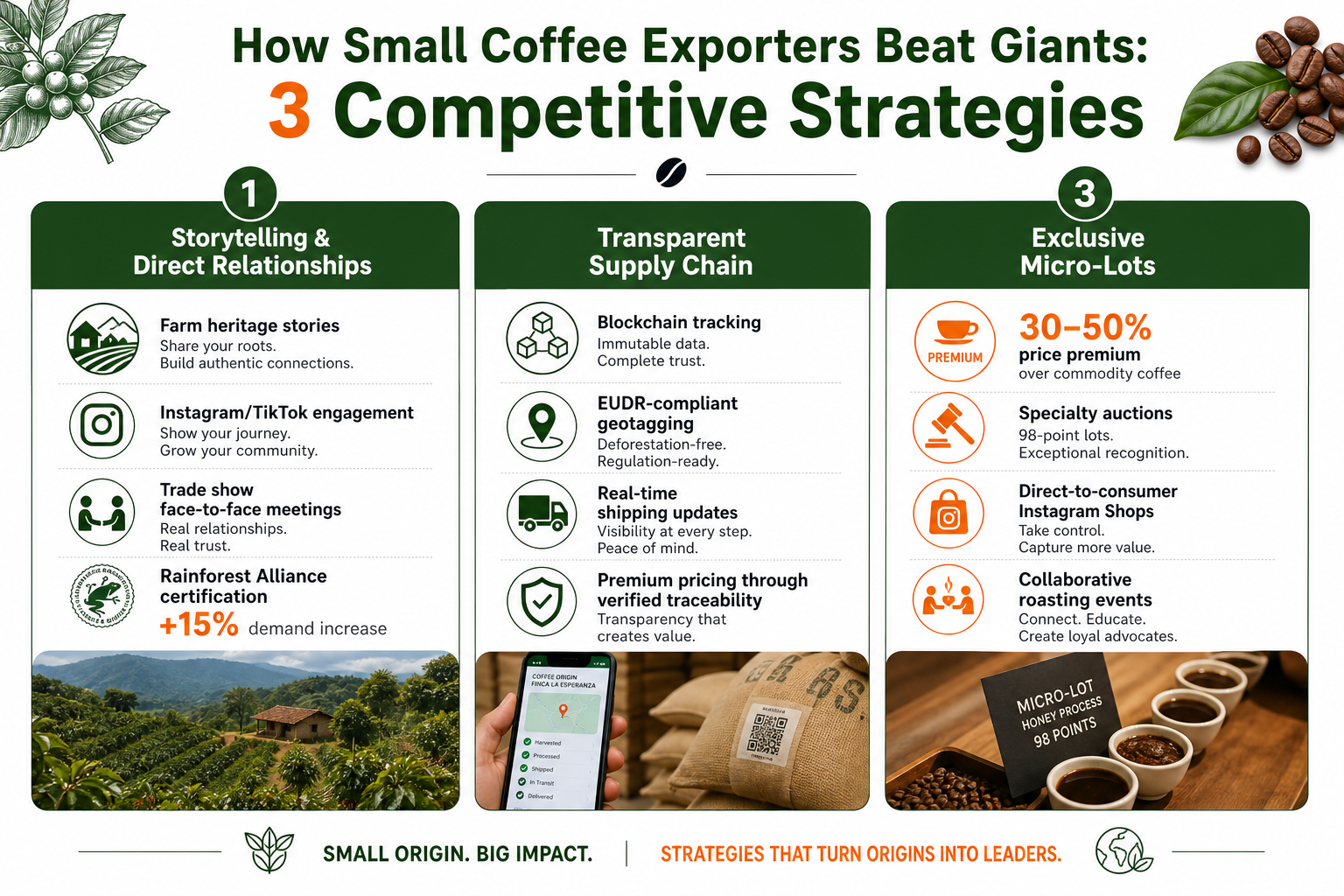
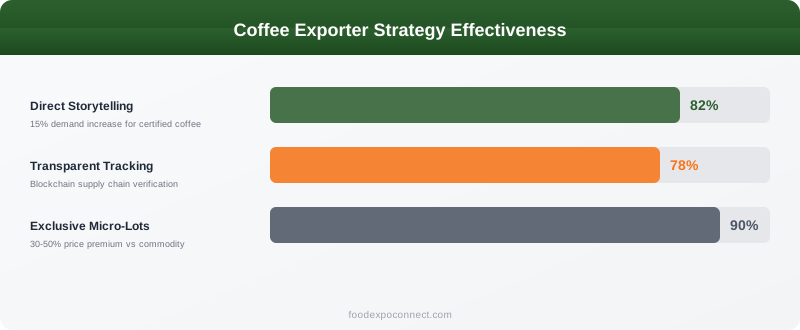
Small coffee exporters succeed by sharing the compelling stories behind their beans. Take a family-run farm that's been passed down through generations, committed to sustainable practices. Consumers increasingly value these origin stories, with Rainforest Alliance-certified coffee seeing a 15% demand increase in the EU and U.S. in 2025.
Direct Relationships Strategy:
- Targeted Storytelling: Highlight the farm's history, sustainable practices, and community impact. Use Instagram and TikTok to connect with specialty roasters who appreciate authenticity.
- Personal Connection: Attend trade shows and coffee festivals to meet buyers face-to-face. Share samples and stories that leave a lasting impression.
- Sustainability Focus: Emphasize certifications and sustainable practices to attract environmentally conscious buyers.
Amidst geopolitical tensions disrupting traditional shipping routes, small exporters secure contracts by building direct relationships that prioritize their beans.
Implementing Transparent Supply Chain Tracking
Transparency isn't just a buzzword—it's essential. Small coffee exporters use digital tools to track their beans from farm to port, allowing buyers to verify quality and sustainability. This approach builds trust and sets them apart from larger competitors.
Supply Chain Tracking Strategy:
- Blockchain Technology: Use blockchain for an unchangeable record of the coffee's journey, assuring buyers of authenticity and quality.
- Geotagging: Adopt EUDR-compliant geotagging to meet EU regulations, simplified and delayed until 2026.
- Real-Time Updates: Provide buyers with real-time shipping and delivery updates, crucial given the current delays caused by the Red Sea crisis.
By ensuring transparency, small exporters can command higher prices and secure premium contracts, even amidst global supply chain challenges.
Creating Exclusive Micro-Lot Offerings
Small exporters offer unique micro-lots, commanding a 30-50% price premium over commodity coffee, appealing to niche markets and discerning buyers.
Micro-Lot Strategy:
- Specialty Auctions: Showcase unique micro-lots at specialty coffee auctions. A 98-point Brazilian auction lot in April 2025 drew significant attention and premium pricing.
- Direct-to-Consumer Sales: Use Instagram Shops to sell micro-lots directly to consumers, bypassing traditional retail channels.
- Collaborative Roasting Events: Partner with specialty roasters for exclusive tasting events, creating buzz around limited-edition batches.
High-value offerings like these help absorb increased expenses due to geopolitical tensions, maintaining profitability.
Common Questions (FAQ)
Q: How can small coffee exporters compete with Starbucks' scale? A: By focusing on storytelling, transparency, and unique offerings, small exporters create niche markets that appeal to specialty buyers valuing authenticity and quality.
Q: What impact do geopolitical tensions have on coffee exports? A: Conflicts in the Middle East, notably around the Strait of Hormuz and Red Sea, disrupt shipping routes and increase costs. Small exporters mitigate risks by diversifying routes and using air freight.
Q: How can blockchain help build trust in the coffee supply chain? A: Blockchain offers a secure, transparent way to track coffee from farm to cup, ensuring authenticity and adherence to sustainability practices.
Q: What are micro-lot offerings, and why are they important? A: Micro-lots are small, exclusive batches of coffee commanding higher prices due to their unique qualities and limited availability. They attract buyers seeking distinct flavors.
Q: What role does social media play in coffee exporting? A: Social media platforms like Instagram and TikTok help small exporters reach global audiences, share stories, and sell directly to consumers, boosting margins and visibility.
Conclusion
In a market dominated by geopolitical tensions and giants like Starbucks, small exporters have carved out their niche. By building direct relationships, implementing transparent supply chains, and offering exclusive micro-lots, they're thriving. As you explore these strategies, remember that success hinges on your unique story and the quality of your beans. Ready to elevate your coffee export game? Let's brew success together.
For more insights on navigating the coffee export landscape, check out our [INTERNAL: European Food Export Regulations] and [INTERNAL: Strategies for Small Business Growth].
About the Author
Jean-Marc Koffi, Export Specialist & AfCFTA Trade Facilitator. With over 14 years of experience, Jean-Marc has exported more than $9.5M of mangoes, cocoa, coffee, and cashews from West Africa to EU, Middle East, and North American markets. He helps African SMEs build reliable, buyer-ready export pipelines under AfCFTA.
Questions and answers
- How does storytelling help small coffee exporters win buyers?
- Sharing the history, sustainable practices and community impact behind a farm helps exporters connect with specialty roasters who value authenticity. Exporters use Instagram and TikTok, trade shows and coffee festivals to share samples and stories, and highlight certifications to attract environmentally conscious buyers.
- Why does supply chain transparency matter for coffee exporters?
- Tracking beans from farm to port lets buyers verify quality and sustainability, which builds trust and sets small exporters apart from larger competitors. Tools include blockchain records, EUDR-compliant geotagging and real-time shipping updates, which help exporters command higher prices and secure premium contracts.
- What are coffee micro-lots and why are they valuable?
- Micro-lots are small, exclusive batches of coffee with unique qualities and limited availability. They can command a 30-50% price premium over commodity coffee. Exporters showcase them at specialty auctions, sell them directly through Instagram Shops and partner with roasters on tasting events.
Written by

Jean Marc Koffi
Co-authorJournalist & Export SpecialistLondon
Jean Marc Koffi is an MBA-trained trade specialist who connects African exporters to global buyers, with over $20M in contracts facilitated and expertise recognized by major trade organizations. Noted for rapid buyer network building, he is an experienced speaker and certified in trade facilitation, origin rules, and food safety.

Alocha Massamba
Co-authorFounder, Epifresh & FoodExpoConnectLondon
Alocha Massamba is the founder of Epifresh and FoodExpoConnect. He builds the technology, data and partnerships that connect African food producers and exporters to international buyers — with a focus on fresh-produce supply chains, cold-chain logistics, and the buyer-discovery platforms small and mid-size exporters need to compete with global incumbents.
Latest briefings
Trade Policy
July 24: Section 122 Dies, Section 338 Rises — Navigating the New US Tariff Landscape for Food ExportersSection 122 import surcharge expires July 24 (effective US tariff rate drops from ~13% to ~7%), but Section 338 invokes 50% tariffs on Canadian dairy and alcohol. What food exporters must know about the new US tariff landscape.
Market Access
China's Imported Food Market 2026: GB Standards Update, CBEC Channels & Market Entry StrategyComplete guide to China food import regulations in 2026 — new GB 2763 pesticide MRLs, GB 7718 labeling update, CBEC e-commerce channels (Tmall Global, JD Worldwide), and how exporters can access $220B+ of import demand.
Certification
5 Certifications Worth More Than a Price Cut in 2026Stop competing on price. Organic, Fair Trade, Rainforest Alliance, B Corp, and SQF certifications can command 20-300% price premiums for African food exporters in 2026. Here is the ROI data for each.