How to Adapt Your Food Export Strategy to Rising Shipping Costs in 2026
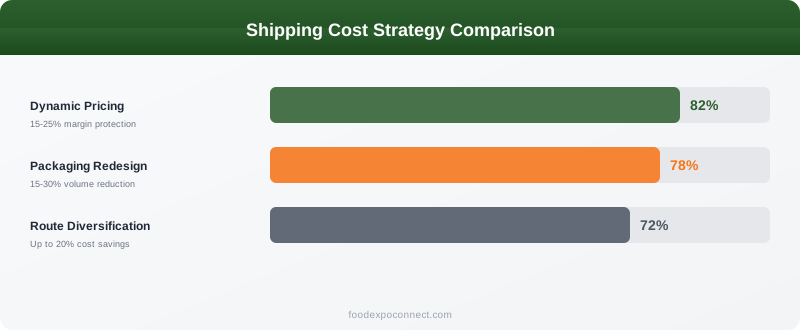
Three ways food exporters can protect margins as shipping costs rise: dynamic pricing with cost adjustment clauses, packaging and pallet redesign, and alternative route networks.
· · 4 min read
In short
How can food exporters protect their margins when shipping costs rise?
Food exporters can protect margins by combining three strategies. Dynamic pricing adjusts export prices to changing freight rates, supported by monitoring tools and contract clauses that allow price adjustments. Redesigning packaging and palletisation cuts wasted container space and shipping weight. Building alternative route networks through secondary ports and multimodal sea, rail and road transport helps avoid high-cost corridors such as the Red Sea and Strait of Hormuz.
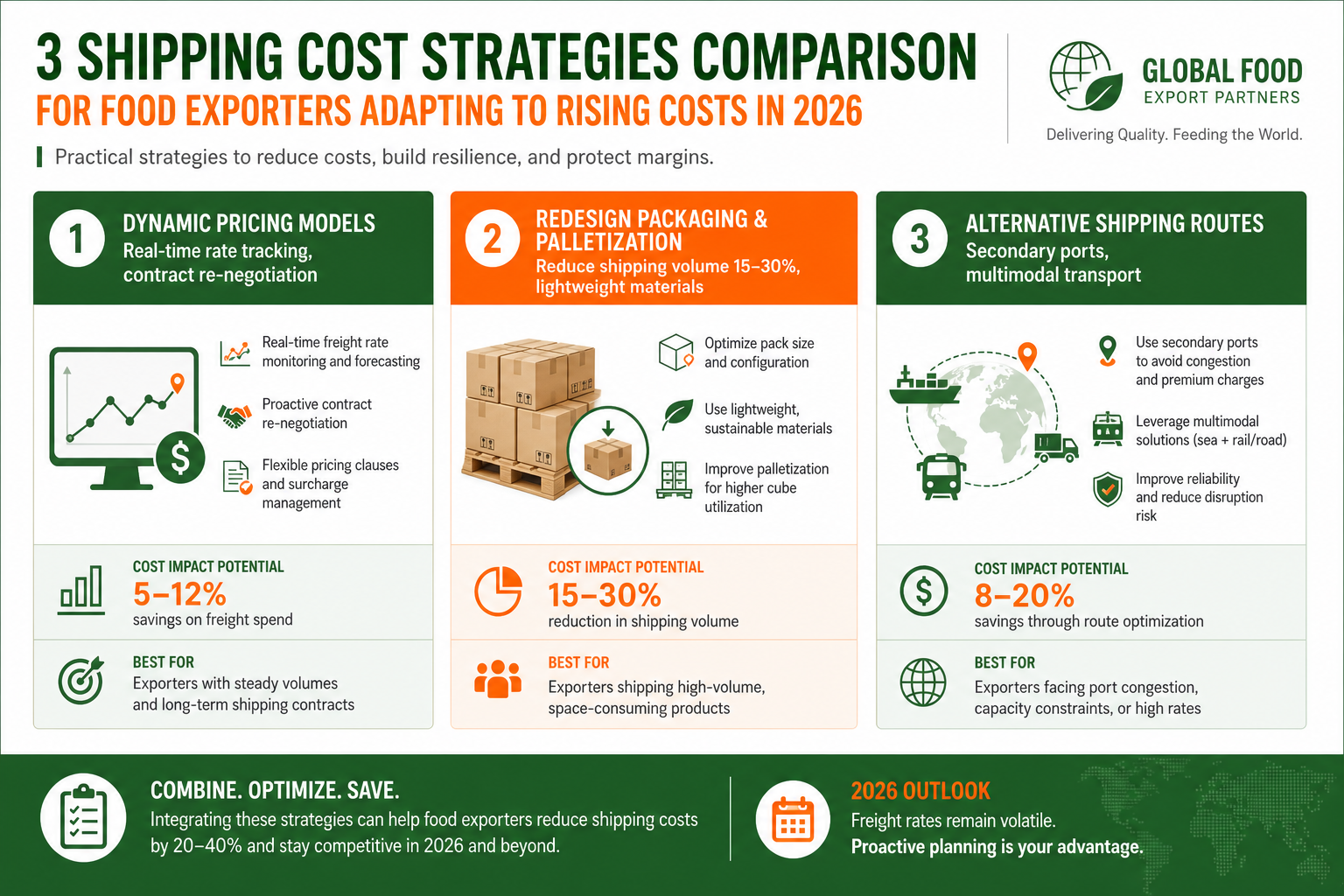
Standing on the busy docks of a major port, you watch as cranes load containers filled with your food exports onto ships headed for foreign markets. The air is rich with the scent of spices and fresh produce, a testament to your hard work. But as the containers sail away, you're left wondering how to maintain profit margins with shipping costs set to rise by 15-25% in 2025. Let's explore how to adjust your export strategy to thrive despite these challenges.
Implement Dynamic Pricing Models
What Is Dynamic Pricing?
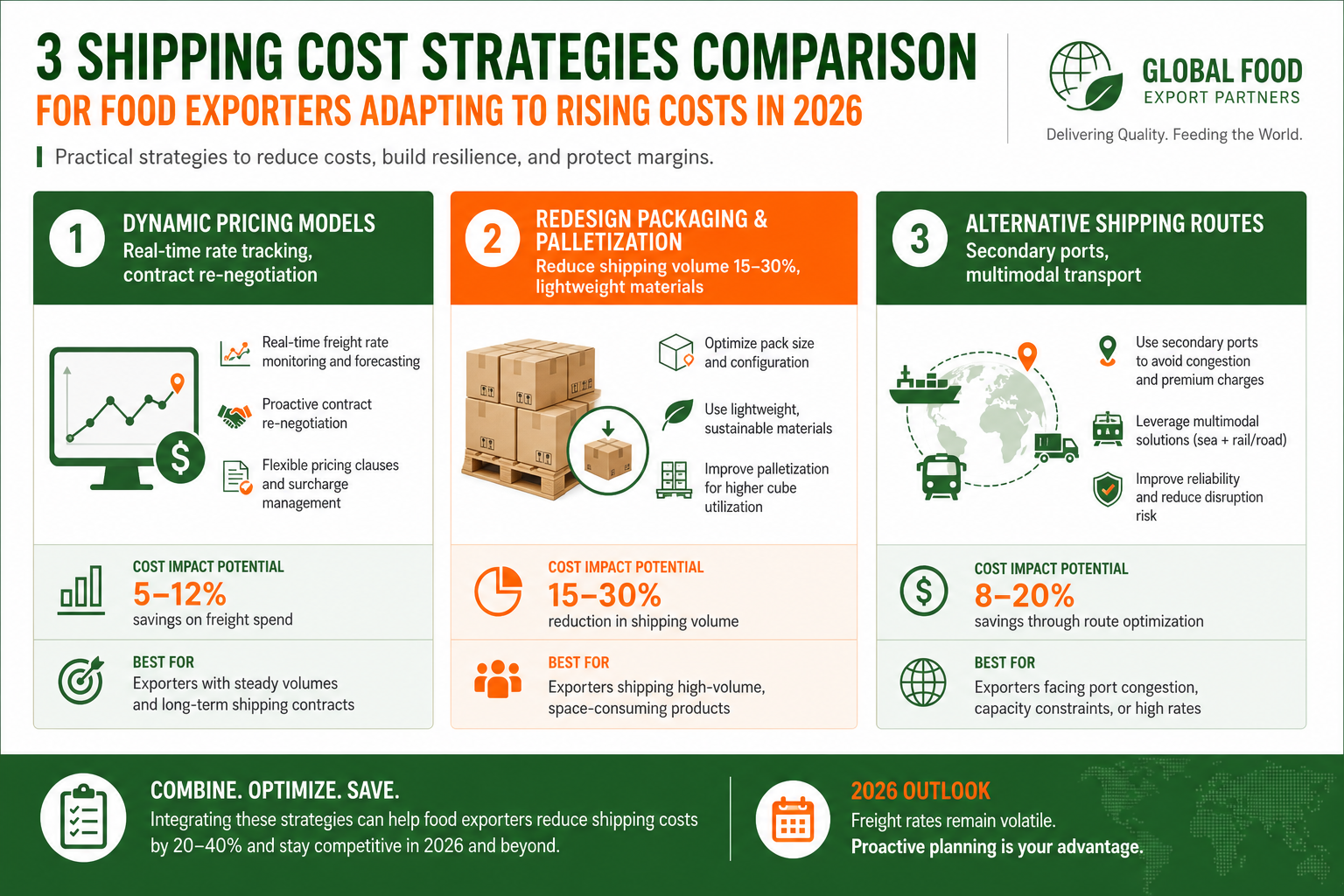
Dynamic pricing means adjusting your export prices in real-time based on changing shipping rates and destination-specific costs. This strategy helps maintain profit margins, even as external factors like geopolitical tensions impact routes such as the Strait of Hormuz and the Red Sea.
How to Implement Dynamic Pricing
-
Use Automated Tools: Invest in software that tracks real-time shipping rates and integrates with your pricing system. AI-powered tools can help you adjust prices swiftly and accurately.
-
Contract Re-Negotiation: Include clauses allowing price adjustments based on shipping cost changes. Force majeure clauses are essential for mitigating risks from geopolitical disruptions.
-
Frequent Monitoring: Set up alerts for significant changes in freight costs to adjust your pricing immediately. This ensures you're ready for sudden increases.
Staying agile is crucial. By adopting dynamic pricing models, you can handle rising shipping costs without sacrificing profit margins.
Redesign Packaging and Palletization
Why Redesign?
Redesigning your packaging can reduce shipping volume by 15-30%, critical when geopolitical tensions drive freight hikes.
Steps to Optimize Packaging
-
Maximize Container Space: Use modular packaging designs that fit perfectly into shipping containers, minimizing wasted space.
-
Lightweight Materials: Switch to lighter, sustainable materials to reduce shipping weight, cut costs, and appeal to eco-conscious consumers.
-
Collaborate with Experts: Work with logistics and packaging specialists to redesign your palletization strategy, ensuring efficient packing without compromising product quality.
These changes not only lower costs but also boost your brand's sustainability credentials, vital as over 60% of consumers prefer deforestation-free labels.
Develop Alternative Shipping Route Networks
The Need for Route Diversification
Middle East crises are causing delays and cost spikes, especially in the Red Sea and Strait of Hormuz. Developing alternative shipping routes is crucial.
Building Your Route Network
-
Secondary Ports: Identify and utilize secondary ports less affected by geopolitical tensions. U.S. Gulf and Japan routes offer competitive rates.
-
Multimodal Transport: Combine sea, rail, and road transport to avoid high-cost corridors. This flexibility helps you avoid delays and reduce costs by up to 20%.
-
Stay Informed: Regularly update your route strategy based on geopolitical developments. Engage with local experts to ensure you're using the most efficient paths.
By developing alternative networks, you can bypass bottlenecks and deliver products on time, maintaining customer trust and satisfaction.
Common Questions (FAQ)
Q: How can dynamic pricing help in the current geopolitical climate?
A: Dynamic pricing lets you adjust prices in real-time based on shipping costs affected by geopolitical tensions, protecting your profit margins.
Q: What are some sustainable packaging options I can consider?
A: Lightweight, recyclable materials like corrugated cardboard or biodegradable plastics can reduce shipping weight and appeal to eco-conscious consumers.
Q: How do I choose the best alternative shipping routes?
A: Evaluate secondary ports and multimodal transport options that offer competitive rates and fewer delays, consulting with local experts for the best advice.
Implementing these strategies will not only shield your business from rising shipping costs but also position you as a leader in the food export industry. Embrace these changes to tackle the challenges of 2025 and beyond.
Ready to take the next step? Explore [INTERNAL: European Food Export Regulations] and [INTERNAL: Strategies for Sustainable Food Packaging] for more insights to refine your export strategy. Let's ensure your business continues to grow despite the obstacles.
About the Author
Jean-Marc Koffi, Export Specialist & AfCFTA Trade Facilitator. With over 14 years of experience exporting $9.5M worth of mangoes, cocoa, coffee, and cashews from West Africa to EU, Middle East, and North American markets, Jean-Marc helps African SMEs build reliable, buyer-ready export pipelines under AfCFTA.
Questions and answers
- What is dynamic pricing for food exporters?
- Dynamic pricing means adjusting export prices in real time based on changing shipping rates and destination-specific costs. Exporters can use software that tracks freight rates, set alerts for significant cost changes, and include contract clauses that allow price adjustments when shipping costs change, with force majeure clauses to cover geopolitical disruption.
- How can packaging changes reduce food export shipping costs?
- Exporters can use modular packaging designed to fit shipping containers with minimal wasted space, switch to lighter and sustainable materials to reduce shipping weight, and work with logistics and packaging specialists to redesign palletisation without compromising product quality. These changes can also strengthen a brand's sustainability credentials.
- How do I choose alternative shipping routes for food exports?
- Identify secondary ports less affected by geopolitical tensions and combine sea, rail and road transport to avoid high-cost corridors. Update your route strategy regularly as geopolitical conditions change, and consult local experts to make sure you are using the most efficient paths.
Written by

Jean Marc Koffi
Co-authorJournalist & Export SpecialistLondon
Jean Marc Koffi is an MBA-trained trade specialist who connects African exporters to global buyers, with over $20M in contracts facilitated and expertise recognized by major trade organizations. Noted for rapid buyer network building, he is an experienced speaker and certified in trade facilitation, origin rules, and food safety.

Alocha Massamba
Co-authorFounder, Epifresh & FoodExpoConnectLondon
Alocha Massamba is the founder of Epifresh and FoodExpoConnect. He builds the technology, data and partnerships that connect African food producers and exporters to international buyers — with a focus on fresh-produce supply chains, cold-chain logistics, and the buyer-discovery platforms small and mid-size exporters need to compete with global incumbents.
Latest briefings
Trade Policy
July 24: Section 122 Dies, Section 338 Rises — Navigating the New US Tariff Landscape for Food ExportersSection 122 import surcharge expires July 24 (effective US tariff rate drops from ~13% to ~7%), but Section 338 invokes 50% tariffs on Canadian dairy and alcohol. What food exporters must know about the new US tariff landscape.
Market Access
China's Imported Food Market 2026: GB Standards Update, CBEC Channels & Market Entry StrategyComplete guide to China food import regulations in 2026 — new GB 2763 pesticide MRLs, GB 7718 labeling update, CBEC e-commerce channels (Tmall Global, JD Worldwide), and how exporters can access $220B+ of import demand.
Certification
5 Certifications Worth More Than a Price Cut in 2026Stop competing on price. Organic, Fair Trade, Rainforest Alliance, B Corp, and SQF certifications can command 20-300% price premiums for African food exporters in 2026. Here is the ROI data for each.