How to prepare for your first food trade show meeting
Five steps for a first food trade show meeting: a strong product presentation, a 60-second pitch, follow-up within 48 hours, diversified shipping routes and social media.
· 5 min read
In short
How do I prepare for my first food trade show meeting?
Prepare in five steps: create a product presentation with quality samples and the certifications buyers need, such as EUDR proof for coffee or cocoa going to the EU; develop a concise 60-second pitch on your unique selling points; follow up systematically within 48 hours; diversify shipping routes and add force majeure clauses; and use social media and QR codes to support your booth.
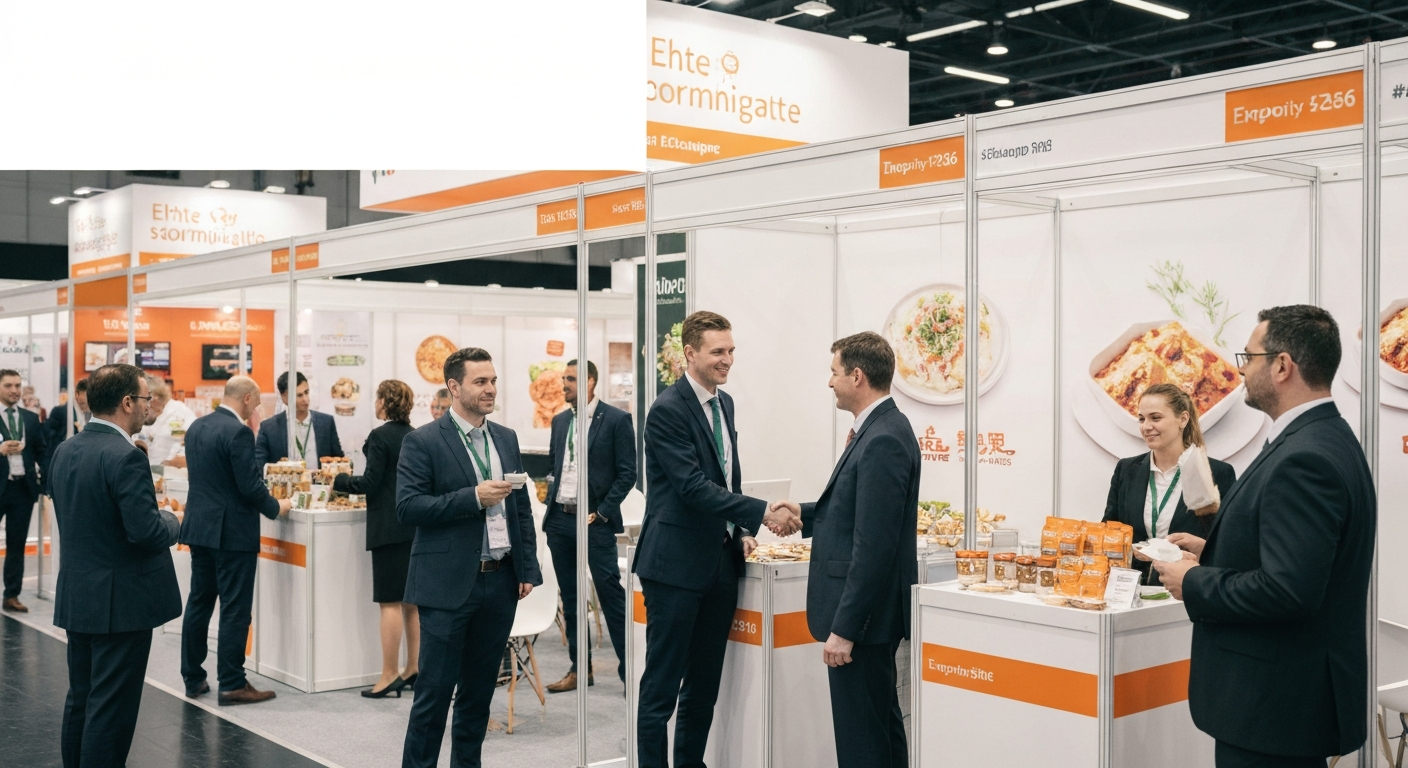
Imagine the bustling aisles of a global food trade show, filled with colorful booths and the enticing aroma of exotic spices. It's your first time here, and the stakes are high. You've worked hard to get your products ready, and now it's time to make an impression that could transform your business. With geopolitical challenges influencing global trade routes, simply showing up isn't enough. Here are five steps to help you prepare, pitch, and follow up effectively at your first food trade show meeting.
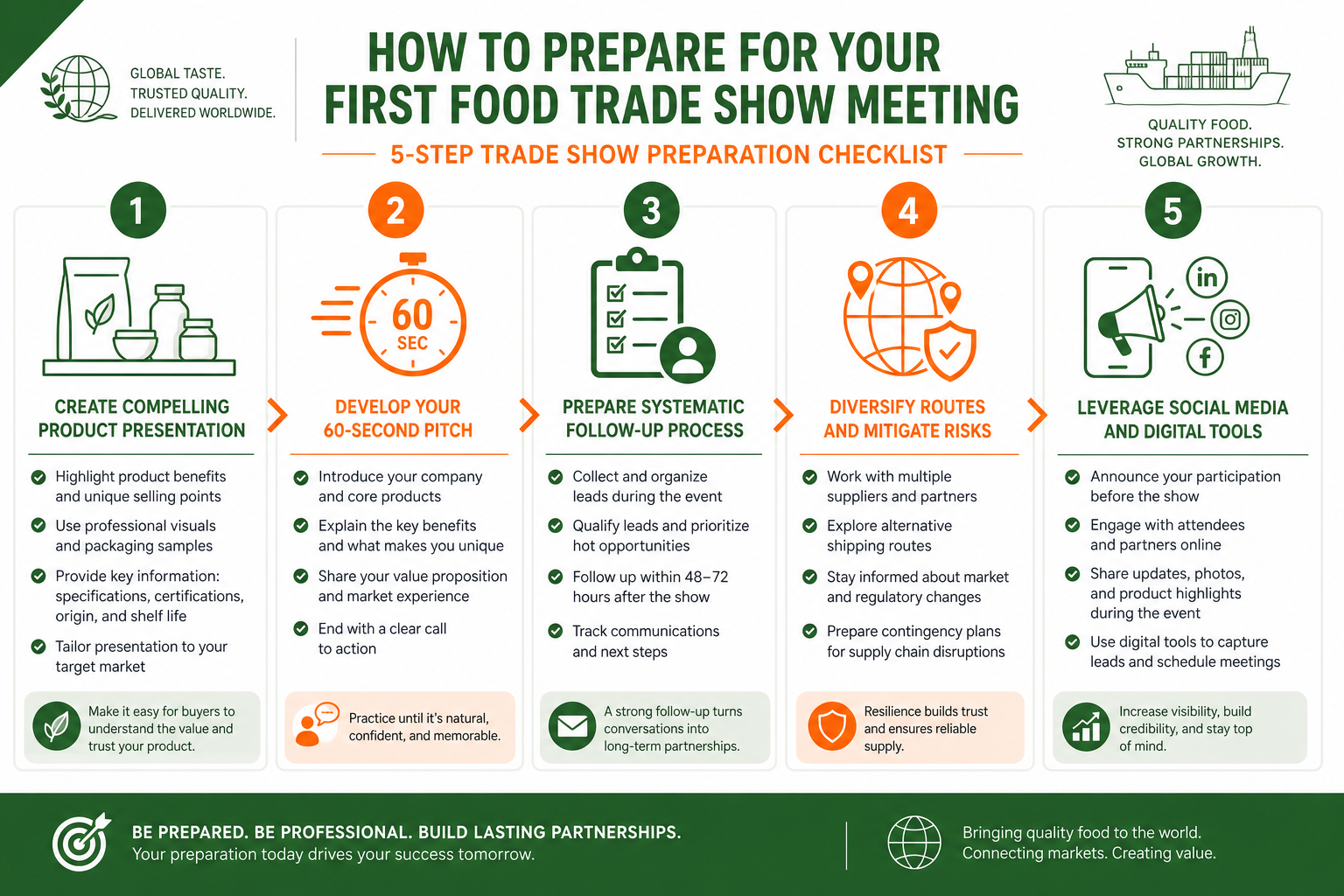
Step 1: Create a Compelling Product Presentation
Start by ensuring your product presentation is top-notch. Showcase your product quality and make sure you're compliant with international regulations. The ongoing crises in the Red Sea and the Strait of Hormuz have made streamlined logistics and compliance documentation crucial. Your samples need to look and taste exceptional and include necessary certifications, like proof of EUDR compliance if you're exporting coffee or cocoa to the EU. Small exporters should secure geolocation data and third-party audits to demonstrate deforestation-free practices, as non-compliance could lead to shipment bans. Consider Brexit's impact on UK-EU border checks, which can delay perishable goods by 1-2 days. Prepare your samples with these factors in mind to build trust and credibility with buyers.
Step 2: Develop a Concise 60-Second Pitch
Your pitch is your chance to grab a buyer's attention quickly. Picture yourself in front of an interested party; you've got 60 seconds to explain why your product stands out. Focus on your unique selling points and how your product meets market needs. Highlight aspects like sustainability, health benefits, and transparent sourcing to set yourself apart. According to Tasty Trends, 60% of buyers now seek transparent labels, so display third-party certifications prominently at your booth. Address current consumer shifts such as demand for "sugar-free" or "high protein" products, appealing to health-conscious buyers and those prioritizing eco-packaging and ethical sourcing.
Step 3: Prepare a Systematic Follow-Up Process
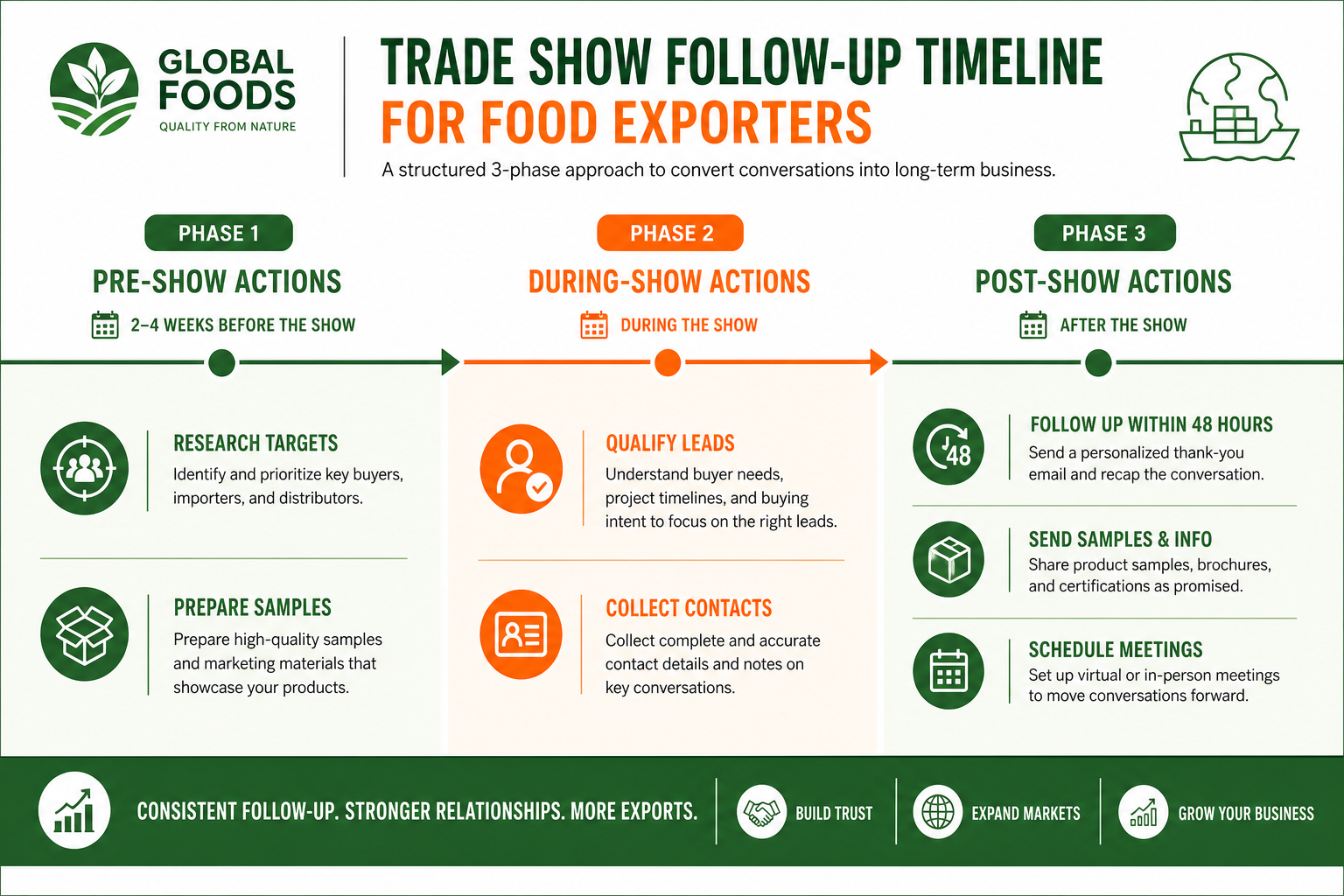
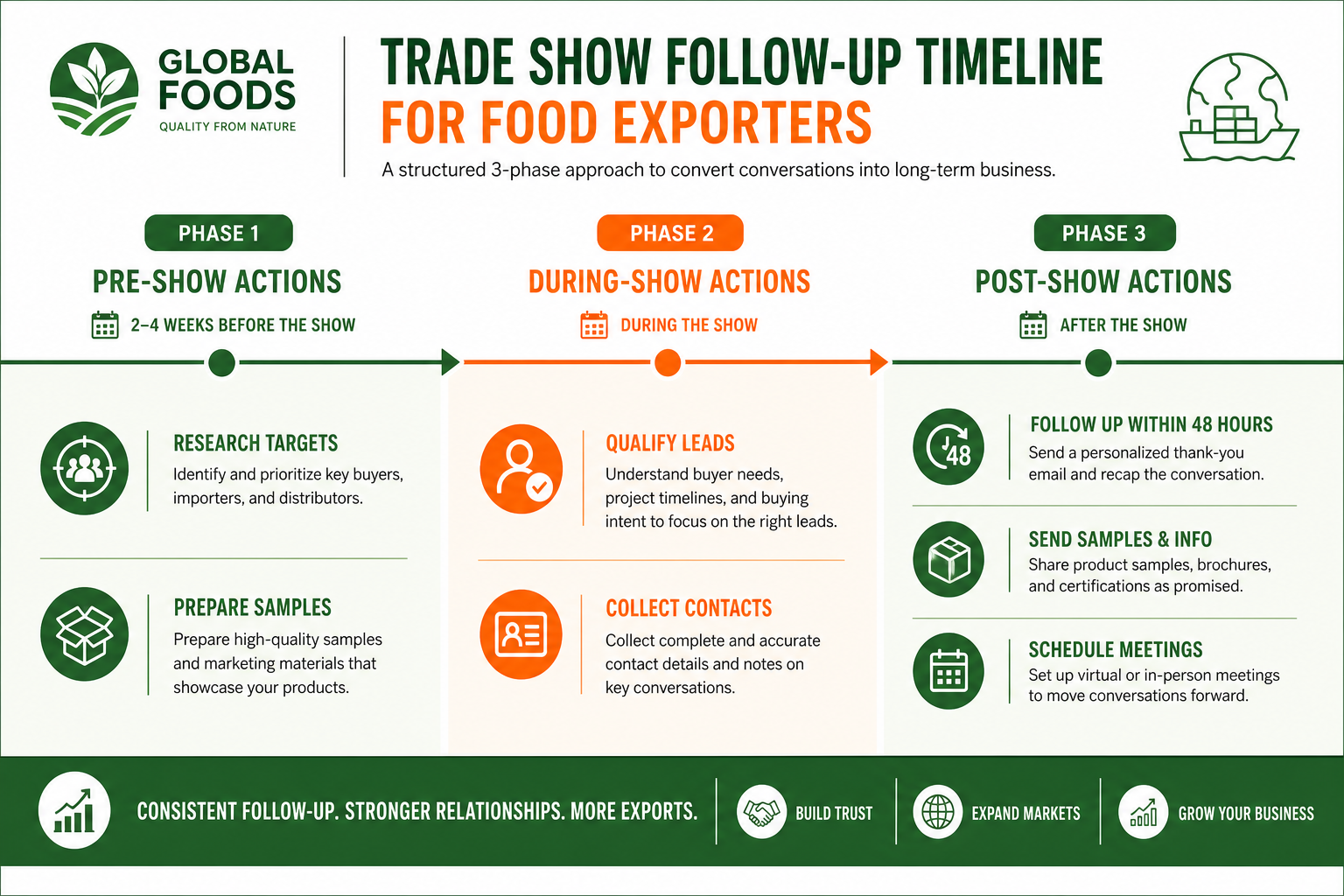
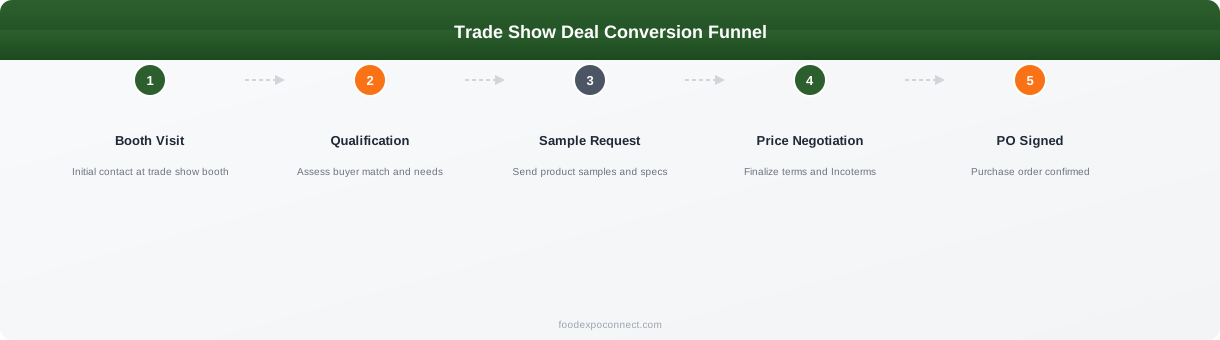 The follow-up is where deals happen. After the initial meeting, aim to convert leads into contracts within 48 hours. With geopolitical tensions causing delays and higher freight costs, acting quickly to secure commitments is crucial. Develop a systematic follow-up process using digital tools to track interactions. The disruptions in the Red Sea and Strait of Hormuz have forced many ships to take longer routes, raising freight costs by 30% for reefer containers. Finalize deals swiftly to avoid price hikes or delays. Use apps to collect immediate feedback and personalize your post-show communications based on gathered insights.
Step 4: Diversify Your Routes and Mitigate Risks
In today’s volatile geopolitical climate, flexibility is key. The closure of Red Sea routes has forced 80% of Asia-Europe ships to take the longer route via the Cape of Good Hope, adding 10-14 days to transit times. This poses logistical and financial challenges. To mitigate these risks, consider diversifying your shipping routes and exploring dynamic insurance adjustments for unforeseen delays. Re-negotiating contracts to include force majeure clauses can offer a safety net against disruptions. Discuss flexible minimum order quantities (MOQs) with buyers to adapt to any shipment schedule changes.
Step 5: Leverage Social Media and Digital Tools
In the digital age, social media can significantly enhance your trade show presence. Use platforms like Instagram to tease your booth offerings, potentially doubling your foot traffic. Engage with potential leads by sharing stories and updates, and use QR codes to provide easy access to product certifications and compliance documentation. Train your staff to align their pitches with current trends to make a substantial impact. Collect feedback via digital apps for real-time adjustments and personalized follow-up strategies, making your interactions more effective.
Conclusion
By preparing thoroughly, pitching effectively, and following up diligently, you're setting yourself up for success at your first food trade show meeting. In today’s challenging geopolitical environment, being proactive and adaptable is more crucial than ever. For more insights on navigating the complexities of food export regulations, check out [INTERNAL: European Food Export Regulations]. Now, go make those connections that could propel your business forward.
FAQ Section
Q: What should I include in my product presentation for a trade show?
A: Showcase product quality and compliance with international regulations. Include necessary certifications like EUDR for EU markets to avoid shipment bans.
Q: How can I effectively pitch my product at a trade show?
A: Develop a concise 60-second pitch highlighting your product's unique selling points and market fit. Focus on current consumer trends such as sustainability and health benefits.
Q: What steps should I take after the trade show to secure deals?
A: Implement a systematic follow-up process within 48 hours using digital tools to track interactions. Personalize communications based on feedback and address logistical delays due to geopolitical disruptions.
Q: How can I mitigate risks associated with geopolitical tensions affecting trade routes?
A: Diversify shipping routes, explore dynamic insurance adjustments, and re-negotiate contracts to include force majeure clauses. Discuss flexible MOQs with buyers.
Q: How can social media enhance my trade show presence?
A: Use platforms like Instagram to share booth teasers and product stories. Engage with leads and provide easy access to certifications via QR codes to boost foot traffic and interest.
By following these steps, you'll not only navigate the challenges of your first trade show but also position your products for success in a competitive market.
About the Author
Jean-Marc Koffi, Export Specialist & AfCFTA Trade Facilitator. Jean-Marc has over 14 years of experience exporting more than $9.5 million worth of mangoes, cocoa, coffee, and cashews from West Africa to EU, Middle East, and North American markets. He helps African SMEs build reliable, buyer-ready export pipelines under AfCFTA.
Questions and answers
- What should I include in my product presentation at a food trade show?
- Show product quality and compliance with international regulations. Samples should look and taste exceptional and come with the necessary certifications, such as proof of EUDR compliance if you export coffee or cocoa to the EU, backed by geolocation data and third-party audits.
- How quickly should I follow up after a trade show meeting?
- Aim to convert leads into contracts within 48 hours. Use digital tools to track interactions, collect feedback through apps and personalise your post-show communications. Acting quickly matters because route disruptions have raised reefer freight costs by 30%, so finalising deals early helps avoid price rises or delays.
- How can exporters reduce shipping risk when agreeing trade show deals?
- Diversify shipping routes, explore dynamic insurance adjustments for delays and re-negotiate contracts to include force majeure clauses. Discuss flexible minimum order quantities with buyers. The post notes that 80% of Asia-Europe ships now go via the Cape of Good Hope, adding 10 to 14 days to transit.
Written by

Jean Marc Koffi
Co-authorJournalist & Export SpecialistLondon
Jean Marc Koffi is an MBA-trained trade specialist who connects African exporters to global buyers, with over $20M in contracts facilitated and expertise recognized by major trade organizations. Noted for rapid buyer network building, he is an experienced speaker and certified in trade facilitation, origin rules, and food safety.

Alocha Massamba
Co-authorFounder, Epifresh & FoodExpoConnectLondon
Alocha Massamba is the founder of Epifresh and FoodExpoConnect. He builds the technology, data and partnerships that connect African food producers and exporters to international buyers — with a focus on fresh-produce supply chains, cold-chain logistics, and the buyer-discovery platforms small and mid-size exporters need to compete with global incumbents.
Latest briefings
Trade Policy
July 24: Section 122 Dies, Section 338 Rises — Navigating the New US Tariff Landscape for Food ExportersSection 122 import surcharge expires July 24 (effective US tariff rate drops from ~13% to ~7%), but Section 338 invokes 50% tariffs on Canadian dairy and alcohol. What food exporters must know about the new US tariff landscape.
Market Access
China's Imported Food Market 2026: GB Standards Update, CBEC Channels & Market Entry StrategyComplete guide to China food import regulations in 2026 — new GB 2763 pesticide MRLs, GB 7718 labeling update, CBEC e-commerce channels (Tmall Global, JD Worldwide), and how exporters can access $220B+ of import demand.
Certification
5 Certifications Worth More Than a Price Cut in 2026Stop competing on price. Organic, Fair Trade, Rainforest Alliance, B Corp, and SQF certifications can command 20-300% price premiums for African food exporters in 2026. Here is the ROI data for each.