Incoterms 2020 Explained for Food Traders: FOB, CIF, DAP & More (+ Calculator)
Which Incoterm puts freight, insurance and risk on whom: FOB, CIF, DAP and the rest explained for food exporters, with worked examples.
· · 4 min read
In short
What is the difference between FOB, CIF and DAP for food exporters?
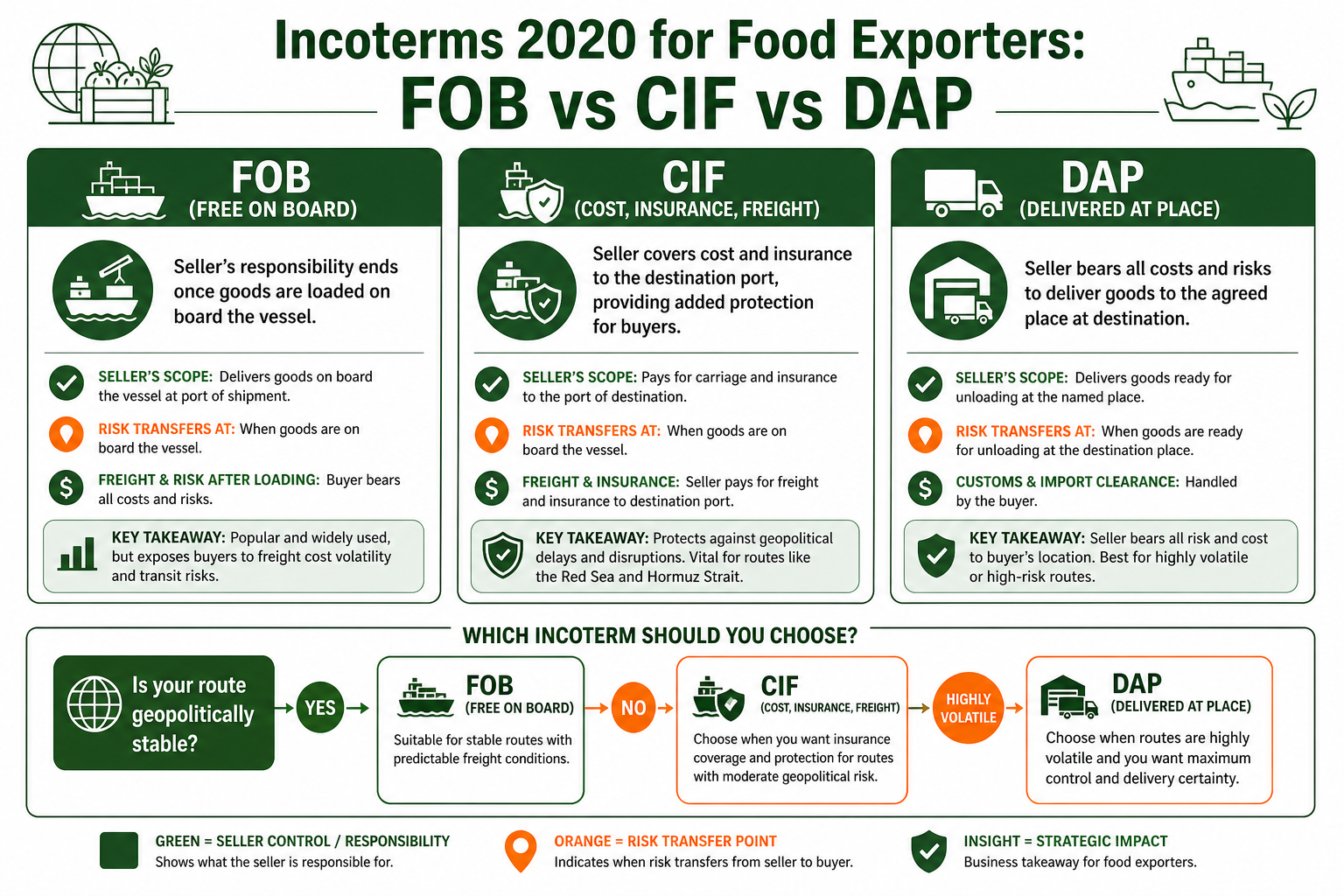
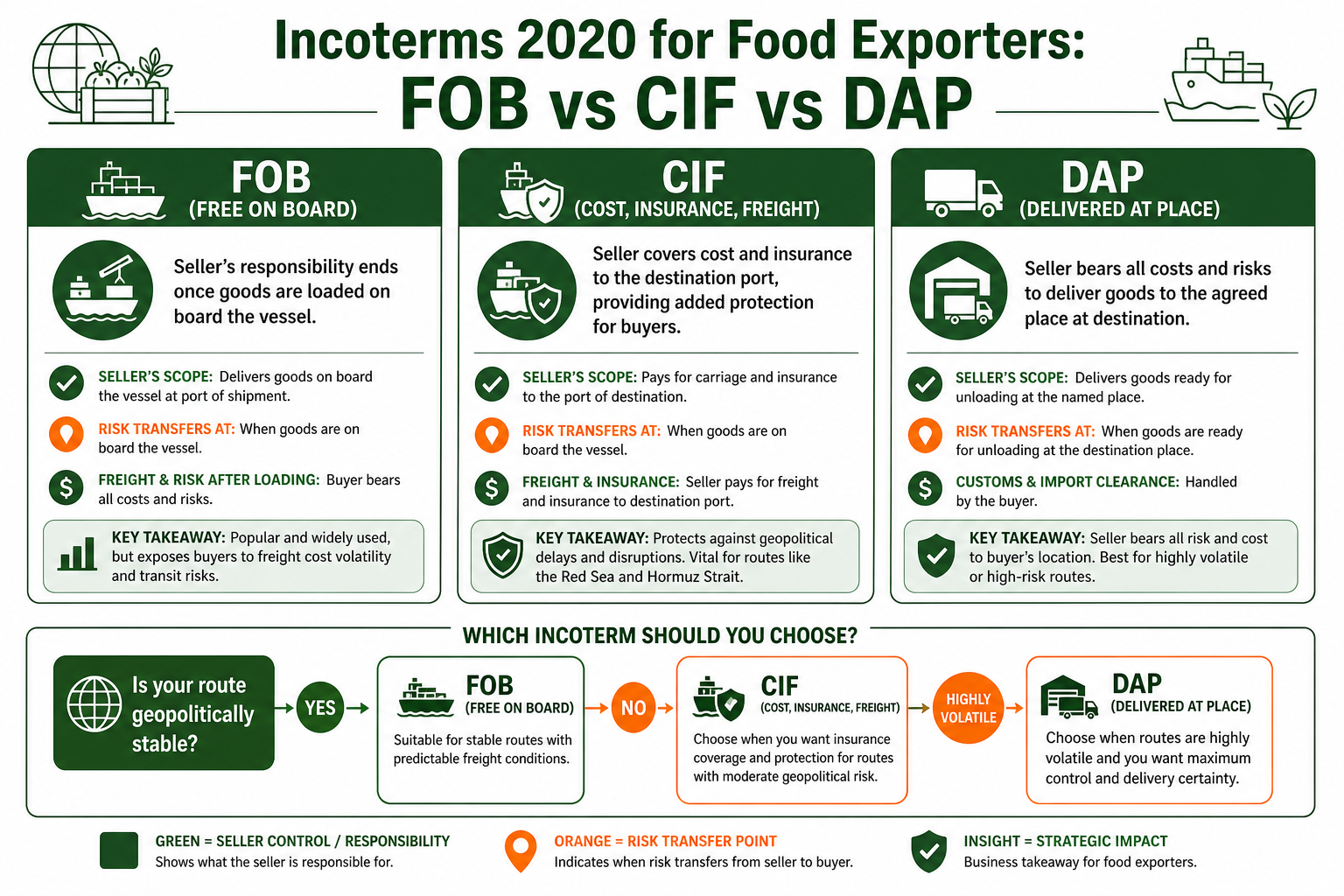
Under FOB, the seller's responsibility ends once goods are loaded onto the vessel. Under CIF, the seller pays costs to the destination port, including insurance. Under DAP, the seller carries all risks and costs until the goods reach the buyer's location, leaving customs and local delivery to the buyer. For perishable food on volatile routes, insurance under CIF and the control DAP gives both matter.
As a mid-sized food exporter, navigating international trade complexities is part of the job. Imagine your shipment of organic apples from Kent heading to Dubai, only to be diverted to a Red Sea port because the Strait of Hormuz is effectively closed. Those apples, once fresh, are now at risk. Choosing the right Incoterms can mean the difference between a successful delivery and a costly setback. This guide breaks down Incoterms 2020 to help you minimize risks and maximize profits in your food export transactions. Plus, we’ve got a practical calculator to help you determine costs and responsibilities, ensuring your perishable goods arrive fresh and on time.
What are Incoterms and Why Do They Matter?
Incoterms, or International Commercial Terms, are crucial in global trade, defining buyer and seller responsibilities. They specify who pays for shipping, insurance, and taxes, and when the risk transfers from seller to buyer.
Key Incoterms for Perishable Food Exports
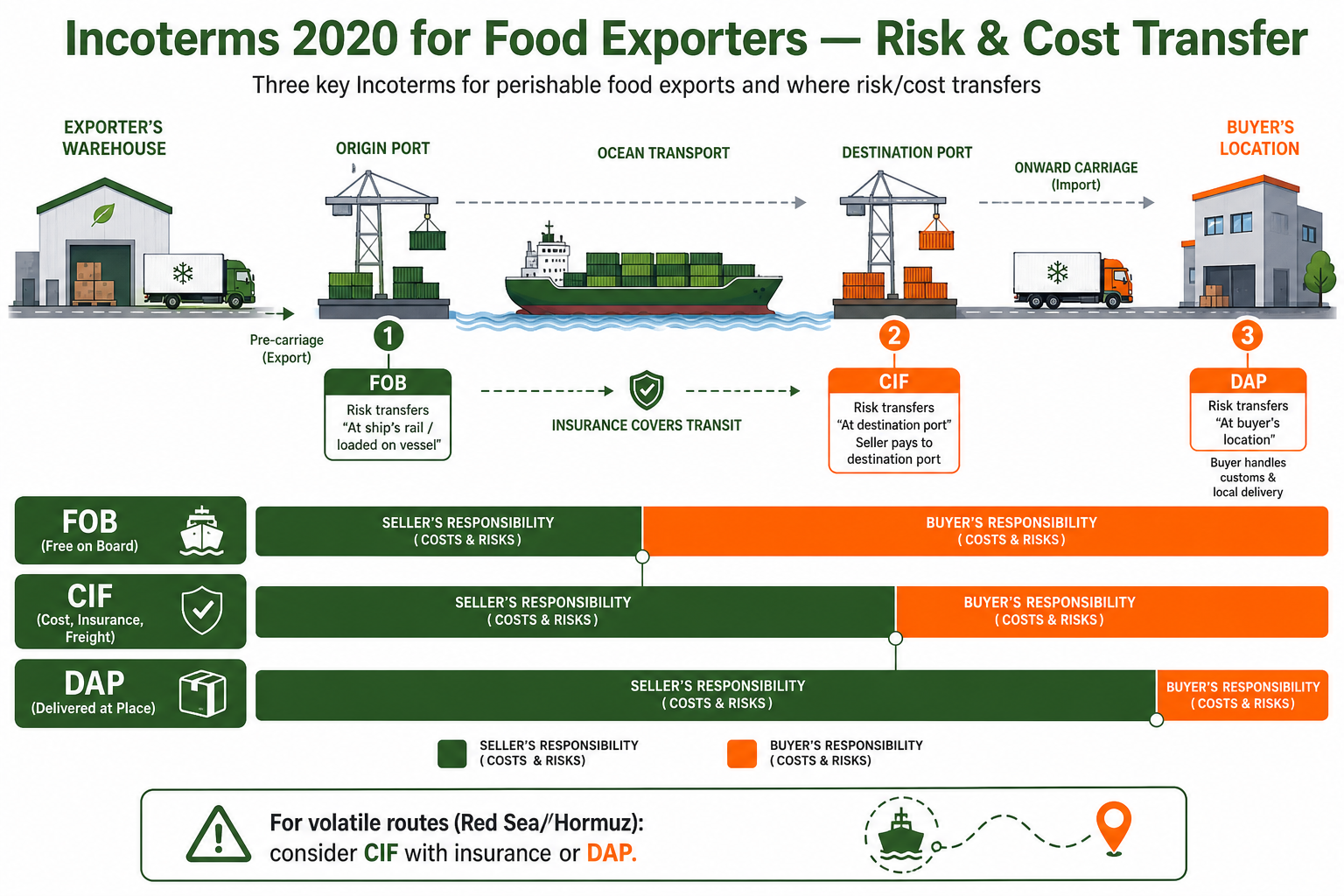
Choosing the right Incoterm can significantly affect your bottom line, especially with perishable goods. Here's how some key terms work:
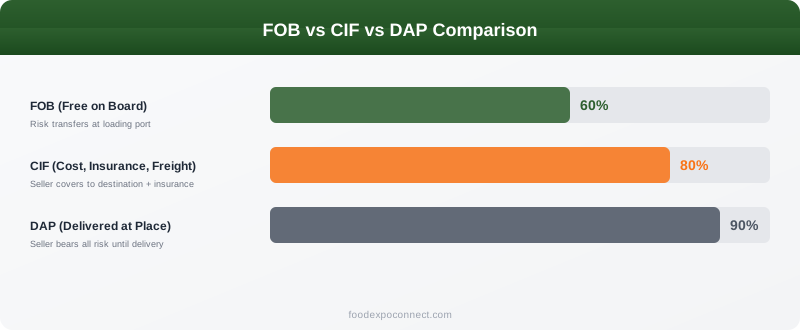
- FOB (Free on Board): The seller's responsibility ends once goods are loaded onto the shipping vessel. While popular, FOB carries risks due to fluctuating freight costs from geopolitical disruptions.
- CIF (Cost, Insurance, and Freight): The seller covers costs to the destination port, including insurance. In areas like the Red Sea and Strait of Hormuz, insurance is vital for covering potential delays.
- DAP (Delivered at Place): The seller assumes all risks and costs until the goods reach the buyer's location. This term can help manage risks on volatile routes, leaving customs and local delivery to the buyer.
Navigating Geopolitical Disruptions
Conflicts in the Middle East, especially in the Strait of Hormuz and the Red Sea, have disrupted global commerce. These routes are crucial for energy and food transport, facing constant threats that increase freight costs and delay delivery times.
Solution: Consider using DAP to transfer risks to the buyer once goods reach their destination. Stay updated with ICC alerts and adjust insurance policies to cover geopolitical risks.
Calculating Costs and Responsibilities
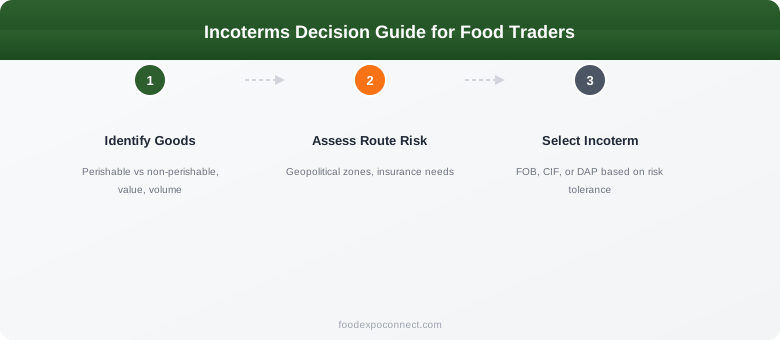
To manage your export transactions effectively, calculate the total landed cost under different Incoterms. This includes the cost of goods, transport, insurance, and duties.
Actionable Tip: Use our calculator to compare costs across scenarios, ensuring you choose the most cost-effective and risk-averse option.
Real-World Examples/Case Studies
Take "Green Harvest," a UK-based exporter specializing in fresh produce. Facing threats from Houthi attacks in the Red Sea, they switched from FOB to CIF, including an insurance policy for delays and potential losses. Despite higher insurance costs, they protected their shipments and kept customers satisfied.
Common Mistakes to Avoid
- Ignoring Geopolitical Updates: Stay informed on current events affecting shipping lanes. This knowledge is crucial for timing shipments and choosing the right Incoterm.
- Underestimating Insurance Needs: Always opt for insurance under CIF terms if you're responsible for freight, given the volatile global landscape.
Expert Tips & Best Practices
- Diversify Shipping Routes: To reduce risks with the Strait of Hormuz and Red Sea, consider alternatives like the Cape of Good Hope for longer-lasting goods.
- Use Forward Contracts: Hedge against currency fluctuations, especially with the USD's strength against the EUR, impacting your import costs.
- Adopt Digital Tools: Use electronic Bill of Lading (eB/L) under Incoterms 2020 for better transparency and traceability.
Frequently Asked Questions (FAQ)
Q: What is the most cost-effective Incoterm for food exporters?
A: DAP is often the most cost-effective for exporters wanting to control costs up to the buyer's location, transferring customs and local delivery risks to the buyer.
Q: How do geopolitical issues affect Incoterm choices?
A: Geopolitical tensions can increase freight costs and delays. Terms like CIF with insurance can protect against these risks.
Q: Have Incoterms changed since 2020?
A: No. The rules in use are Incoterms 2020, published by the International Chamber of Commerce and in force since 1 January 2020. Check the ICC website for news of the next revision before relying on any other version.
Conclusion
Mastering Incoterms 2020 is essential for food exporters in the global market. By understanding each term's implications, particularly amid current geopolitical challenges, you can make informed decisions that protect your shipments and optimize your bottom line. Ready to take control of your food exports? [Explore our interactive Incoterms calculator now].
By integrating these strategies, you'll be well-prepared to handle the dynamic environment of international food trade, ensuring your products reach their destinations efficiently and profitably.
About the Author
Jean-Marc Koffi, Export Specialist & AfCFTA Trade Facilitator. With 14+ years of experience exporting over $9.5M of mangoes, cocoa, coffee, and cashews from West Africa to the EU, Middle East, and North America, Jean-Marc helps African SMEs build reliable, buyer-ready export pipelines under AfCFTA.
Questions and answers
- Which Incoterm is most cost-effective for food exporters?
- The post suggests DAP is often the most cost-effective for exporters who want to control costs up to the buyer's location, since customs and local delivery risks pass to the buyer. Compare the total landed cost, covering goods, transport, insurance and duties, under each term before deciding.
- How do Red Sea and Strait of Hormuz disruptions affect Incoterm choice?
- Disruption raises freight costs and delays delivery, which makes FOB riskier when freight prices swing. CIF with insurance can protect against delays and losses. For Gulf-bound cargo, check war-risk insurance and rerouting surcharges explicitly under CIF and CIP, as most cargo now enters via Red Sea or Omani ports.
- What mistakes should food traders avoid when using Incoterms?
- Avoid ignoring geopolitical updates that affect shipping lanes, since they influence timing and the right Incoterm. Avoid underestimating insurance: take insurance under CIF if you are responsible for freight. The post also recommends diversifying routes, using forward contracts against currency swings and adopting electronic bills of lading.
Written by

Jean Marc Koffi
Co-authorJournalist & Export SpecialistLondon
Jean Marc Koffi is an MBA-trained trade specialist who connects African exporters to global buyers, with over $20M in contracts facilitated and expertise recognized by major trade organizations. Noted for rapid buyer network building, he is an experienced speaker and certified in trade facilitation, origin rules, and food safety.

Alocha Massamba
Co-authorFounder, Epifresh & FoodExpoConnectLondon
Alocha Massamba is the founder of Epifresh and FoodExpoConnect. He builds the technology, data and partnerships that connect African food producers and exporters to international buyers — with a focus on fresh-produce supply chains, cold-chain logistics, and the buyer-discovery platforms small and mid-size exporters need to compete with global incumbents.
More in Payments & FX for Exporters
Full series →- Best Payment Platforms for Food Exporters in 2026: Wise vs Payoneer vs Banks (Real Fee Comparison)
International payment fees quietly eat 3-7% of your export revenue. We tested Wise, Payoneer, and traditional banks with real transaction scenarios. Here's which platform saves you the most money — and when to use each one.
- International Payment Solutions for Food Exporters: Complete 2026 Comparison Guide
Compare the best international payment methods for food exporters. Learn about costs, speed, and features of traditional banks, Wise, PayPal, and specialized platforms to choose the right solution for your export business.
Latest briefings
Trade Policy
July 24: Section 122 Dies, Section 338 Rises — Navigating the New US Tariff Landscape for Food ExportersSection 122 import surcharge expires July 24 (effective US tariff rate drops from ~13% to ~7%), but Section 338 invokes 50% tariffs on Canadian dairy and alcohol. What food exporters must know about the new US tariff landscape.
Market Access
China's Imported Food Market 2026: GB Standards Update, CBEC Channels & Market Entry StrategyComplete guide to China food import regulations in 2026 — new GB 2763 pesticide MRLs, GB 7718 labeling update, CBEC e-commerce channels (Tmall Global, JD Worldwide), and how exporters can access $220B+ of import demand.
Certification
5 Certifications Worth More Than a Price Cut in 2026Stop competing on price. Organic, Fair Trade, Rainforest Alliance, B Corp, and SQF certifications can command 20-300% price premiums for African food exporters in 2026. Here is the ROI data for each.