5 Rapid Ways to Export West African Mangoes to EU Markets
Five fast, practical moves to get West African mangoes export-ready for demanding EU buyers, from traceability and certification to cold chain and tariffs.
· · 11 min read
In short
How can West African exporters get mangoes into EU markets?
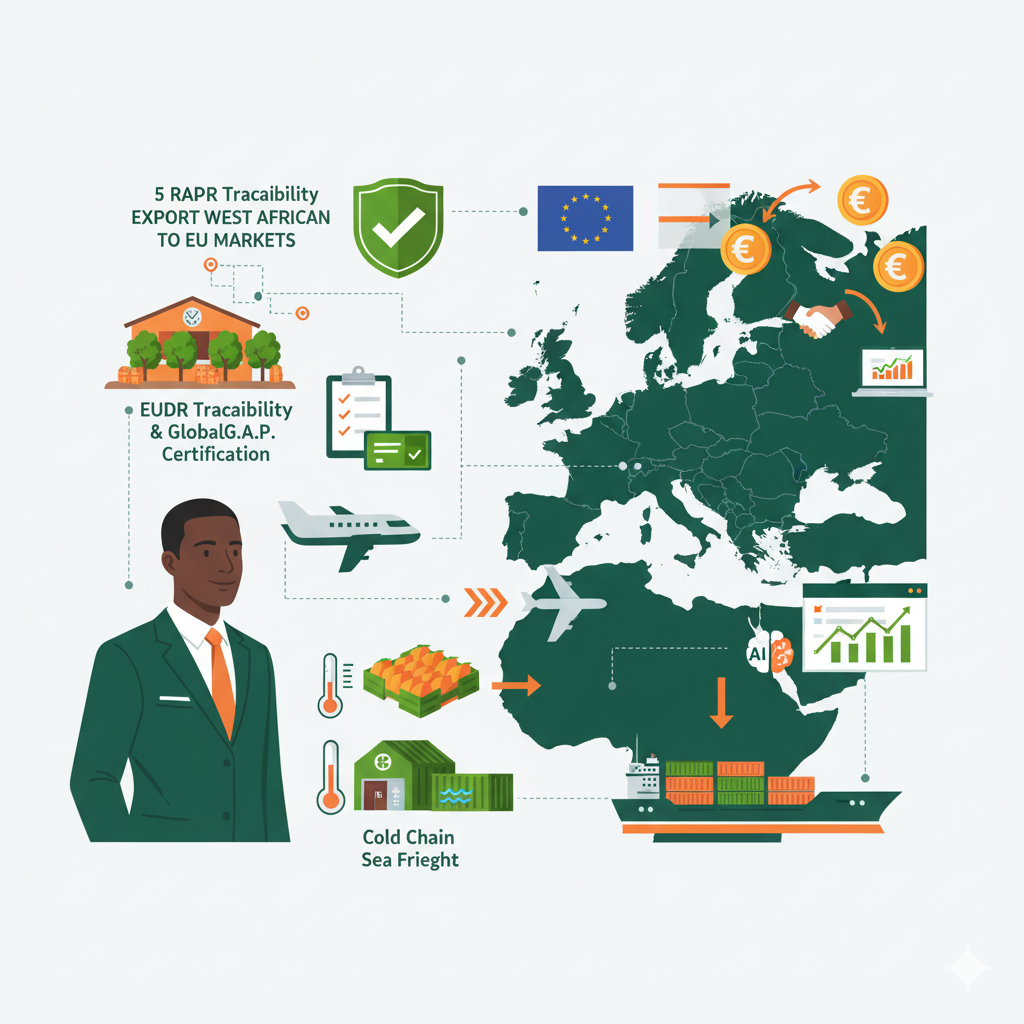
West African mango exporters win EU buyers by fixing compliance first. Map every farm with GPS coordinates and log pesticide use and harvest dates for traceability. Start GlobalG.A.P. or organic certification at least nine months before the shipping season. Use cold chain handlers that hold 10-12°C from packhouse to arrival, check EPA tariff eligibility to cut duties, and tell a clear ethical sourcing story.
Export Documentation Checklist
Product-specific documentation checklists for sesame, shea, coffee, cocoa, fresh produce, and processed foods
TL;DR
- EU mango demand is growing; exporters that prove traceability win contracts.
- Start GlobalG.A.P. or organic certification at least 9 months before the shipping season.
- Cold chain partners can significantly cut spoilage versus ambient shipping routes.
- Where trade agreements reduce duties, reinvest those savings in marketing—AI visibility is your next KPI.
By Jean-Marc Koffi | Export Specialist & AfCFTA Trade Facilitator
Introduction
Most mango exporters miss the EU window not because fruit quality is poor, but because compliance paperwork collapses under scrutiny. EU RASFF alerts show that multiple West African mango consignments have been rejected in recent seasons for traceability and compliance gaps. If you want buyers to remember your brand—and not just your commodity—build entity networks, not just keywords. Here’s the five-move playbook we use with exporters who want their first EU container to stick.
Tip 1 — Prove Traceability Before Brussels Asks
The EU Deforestation Regulation (EUDR) starts applying from December 2024 for several forest-risk commodities. While mangoes are not currently listed, buyers increasingly expect similar traceability standards from all suppliers. CBI reports that buyers now demand plot-level geolocation data.
What to do this week
- Map each farm with GPS coordinates and store them in a shared ledger.
- Train field agents to log pesticide use and harvest dates in real time.
- Assign a traceability manager who signs off before any shipment leaves the packhouse.
Key takeaway: Transparency is your first sales pitch—make the audit trail part of your prospecting emails.
Tip 2 — Lock Certification Timelines Now
Certified mangoes can achieve meaningful price premiums versus uncertified fruit, according to CBI. That upside often covers the certification bill quickly.
| Certification Step | Lead Time | Notes |
|---|---|---|
| Gap assessment & corrective actions | 4-6 weeks | Work with accredited local agronomy or export consultants |
| GlobalG.A.P. documentation | 8-10 weeks | Translate SOPs into French & English |
| Lab testing & residue analysis | 3 weeks | Partner labs: SGS, Bureau Veritas |
| Final audit & license issuance | 4 weeks | Schedule before peak bloom |
What to do this week
- Book your pre-audit with an accredited inspector.
- Build a shared folder with SOPs, spray records, and training logs.
- Pre-pay lab testing to avoid the harvest rush.
Key takeaway: Certification is your shortcut to authority—mention it in every buyer outreach message you send.
Tip 3 — Cut Spoilage with Cold Chain Muscle
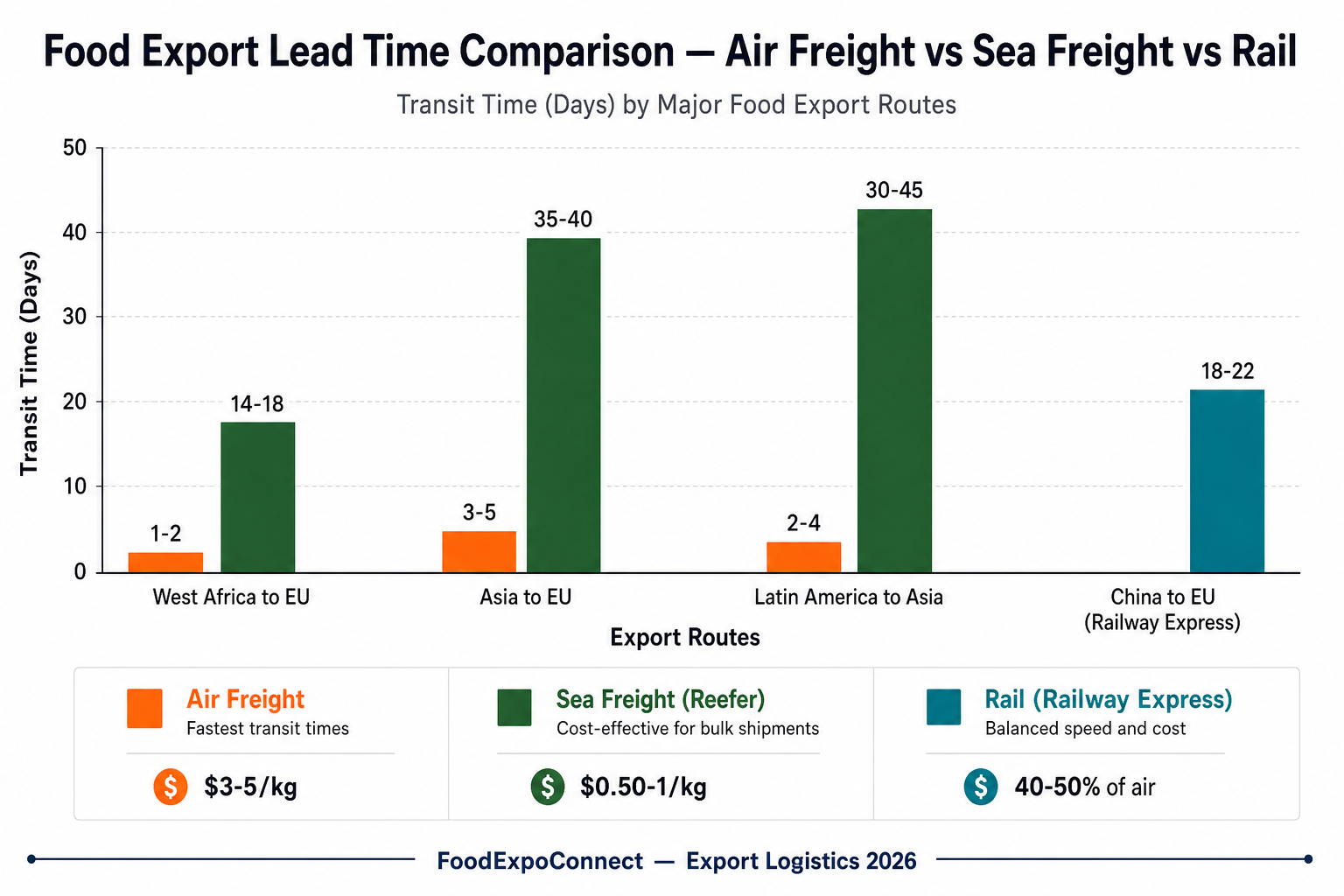
Airfreight rates for perishables remain above pre-pandemic averages (OECD, 2025). Without a reliable cold chain, exporters can lose a significant share of volume before arrival (industry case studies).
What to do this week
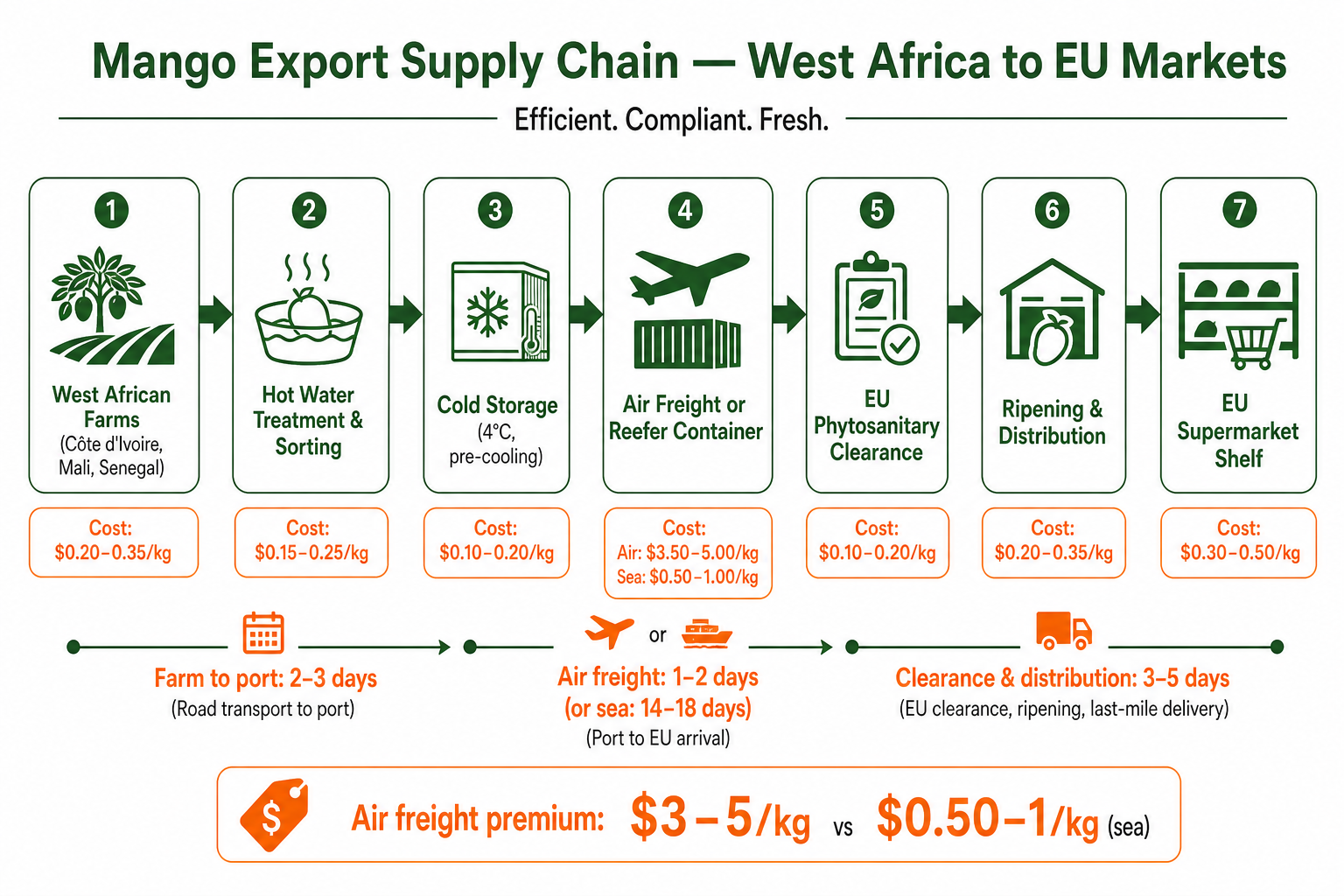
- Partner with handlers that guarantee 10–12°C from packhouse to Schiphol.
- Install data loggers in every pallet; export the report as proof-of-care for buyers.
- Update your SOPs to include emergency rerouting if a transit hub delays clearance.
Key takeaway: Fresh arrivals aren’t luck—they’re engineered with disciplined logistics routines.
Tip 4 — Use EPA Tariffs to Fund Growth
Economic Partnership Agreements (EPAs) and other trade schemes can reduce or remove duties for qualifying products and origins. For some mango exporters, that frees several percentage points of landed cost.
What to do this week
- Confirm your HS codes and EPA eligibility with customs brokers in Abidjan or Accra.
- Redirect the saved tariffs into buyer trips or digital campaigns that prove buyer trust.
- Sync with our trade show strategy guide to convert those euros into lined-up meetings.
Key takeaway: Duty savings are dry powder—invest them where buyer trust compounds.
Tip 5 — Win on Story, Not Just Sweetness
The EU’s Farm to Fork Strategy makes ethical sourcing a default expectation. Consumers want to know why your mangoes matter beyond flavor.
What to do this week
- Film short reels showing farmers using sustainable irrigation.
- Spotlight female-led cooperatives and publish their metrics on living income progress.
- Repurpose those stories into LinkedIn carousels that feed the machines and connect with humans.
Key takeaway: Narrative equity turns seasonal fruit into lasting brand recall.
Frequently Asked Questions
How do I prove compliance with the EU Deforestation Regulation?
Collect GPS plots, supplier declarations, and farm management plans, then bundle them into a due diligence statement submitted through your importer before customs clearance.
What shipping window is most reliable for West African mangoes?
Plan first arrivals between April and July when EU demand is high and transit temperatures stay manageable.
Which labs are trusted for residue testing?
SGS, Bureau Veritas, and Cotecna operate accredited labs in Abidjan, Bamako, and Accra with turnaround times under 10 days.
How many internal links should each article include?
Target at least 10 internal links; start with our resources on EU import requirements, food safety certification, and buyer outreach strategy.
What’s the best way to monitor cold chain performance?
Use Bluetooth data loggers with apps that generate PDF reports—importers will archive them as part of supplier verification.
Key Statistics & Data
- >450,000 tonnes: direct imports of mangoes into Europe from non-European countries in 2022 (CBI, FRUITROP/Eurostat)
- Around 70%: share of Latin American suppliers in European mango imports in 2022, with African suppliers accounting for roughly 15% (CBI, FRUITROP/Eurostat)
🥭 Get the Mango Export Checklist →
22-point pre-shipment checklist for West African mango exporters. EU import compliance, traceability documentation, phytosanitary requirements, and cold chain protocols.
Free download — no email required.
Conclusion
Winning the EU mango market is a systems game, not a guessing game. Document traceability, schedule certification early, harden your cold chain, reinvest duty savings, and tell a story only your cooperative can own. To keep momentum, grab our Export Readiness Checklist lead magnet and audit your operations line by line. Buyers don’t care about your product—they care about solving their supply problems—so show them you’ve solved yours first.
Related Resources
Questions and answers
- How long does GlobalG.A.P. certification take for mango exporters?
- The article sets out four steps: a gap assessment and corrective actions taking 4-6 weeks, GlobalG.A.P. documentation taking 8-10 weeks, lab testing and residue analysis taking 3 weeks, and a final audit and licence issuance taking 4 weeks. It advises starting at least nine months before the shipping season.
- What temperature should mangoes be kept at during export to the EU?
- The article recommends partnering with handlers that guarantee 10-12°C from packhouse to Schiphol. It also advises installing data loggers in every pallet so the temperature report can be shared with buyers as proof of care, and adding emergency rerouting to your SOPs in case a transit hub delays clearance.
- When should West African mangoes arrive in the EU?
- The article advises planning first arrivals between April and July, when EU demand is high and transit temperatures stay manageable. Certification, lab testing and cold chain arrangements should be booked well before then to avoid the harvest rush.
Written by

Jean Marc Koffi
Co-authorJournalist & Export SpecialistLondon
Jean Marc Koffi is an MBA-trained trade specialist who connects African exporters to global buyers, with over $20M in contracts facilitated and expertise recognized by major trade organizations. Noted for rapid buyer network building, he is an experienced speaker and certified in trade facilitation, origin rules, and food safety.

Alocha Massamba
Co-authorFounder, Epifresh & FoodExpoConnectLondon
Alocha Massamba is the founder of Epifresh and FoodExpoConnect. He builds the technology, data and partnerships that connect African food producers and exporters to international buyers — with a focus on fresh-produce supply chains, cold-chain logistics, and the buyer-discovery platforms small and mid-size exporters need to compete with global incumbents.
Latest briefings
Trade Policy
July 24: Section 122 Dies, Section 338 Rises — Navigating the New US Tariff Landscape for Food ExportersSection 122 import surcharge expires July 24 (effective US tariff rate drops from ~13% to ~7%), but Section 338 invokes 50% tariffs on Canadian dairy and alcohol. What food exporters must know about the new US tariff landscape.
Market Access
China's Imported Food Market 2026: GB Standards Update, CBEC Channels & Market Entry StrategyComplete guide to China food import regulations in 2026 — new GB 2763 pesticide MRLs, GB 7718 labeling update, CBEC e-commerce channels (Tmall Global, JD Worldwide), and how exporters can access $220B+ of import demand.
Certification
5 Certifications Worth More Than a Price Cut in 2026Stop competing on price. Organic, Fair Trade, Rainforest Alliance, B Corp, and SQF certifications can command 20-300% price premiums for African food exporters in 2026. Here is the ROI data for each.